Why Fixed Par Levels Fail Modern Kitchens
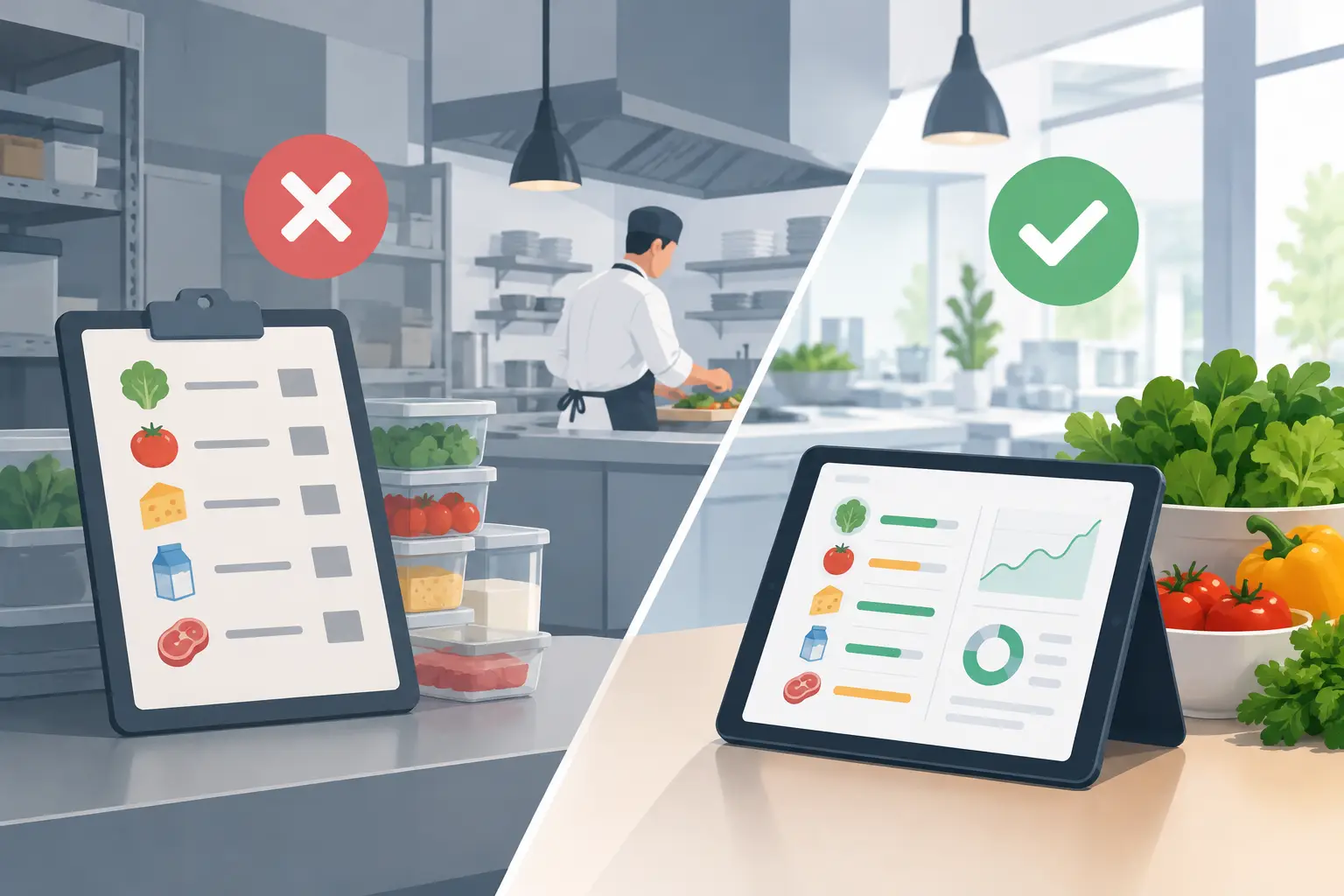
The walk-in is full, yet the line is short on the one garnish every plate needs. Or the delivery arrives with another case of an item nobody has sold through in weeks. That is why fixed par levels fail modern kitchens: they treat demand as stable when the kitchen is anything but. A par number written months ago cannot see tonight's covers, tomorrow's event, a menu change, or the supplier price that moved before the invoice did.
A par level is supposed to protect service. At its best, it gives the team a clear reorder point and enough stock to execute without panic buying. The problem is not the idea of a par. The problem is treating one static number as a permanent answer.
Why Fixed Par Levels Fail Modern Kitchens
Modern kitchens operate on moving inputs. Covers shift with reservations, weather, local events, delivery demand, and private bookings. The menu changes. Portions get tightened. A dish starts selling after a server recommendation or stops selling when an ingredient is unavailable. Supplier pack sizes change, delivery days move, and prices rise without asking permission.
A fixed par ignores those changes until someone notices the consequences. By then, the kitchen has already over-prepped, run out, substituted, 86'd a dish, or tied cash up in excess inventory.
That makes fixed pars feel safe while quietly creating risk. They reduce the daily decision to a number on a shelf tag, but they do not reduce the uncertainty behind that number. Good control is not about pretending the operation is predictable. It is about making the next purchasing and prep decision reflect what is actually scheduled to happen.
A Static Number Cannot Read the Bookings
Consider a café that normally sells 40 lunch covers but has a 90-person catered lunch on Friday. A fixed par based on a typical week tells the buyer to order for normal traffic. The result is obvious: an emergency order, rushed prep, staff working around missing product, and a service team explaining limitations to guests.
The reverse is just as costly. If a restaurant holds weekend-level inventory through a quiet midweek stretch, perishables sit longer than they should. The team may prep to fill the walk-in rather than prep to sell. The waste log grows, but the original cause is hidden: the par was not connected to demand.
Bookings are not a nice extra for a kitchen system. They are an operating signal. When expected covers change, pars should change with them. A 50-cover Tuesday and a 150-cover Saturday should not trigger the same prep quantities or ordering list simply because they share a calendar week.
This does not mean every forecast will be perfect. Walk-ins happen, weather changes plans, and sales mix can surprise you. It means the kitchen starts from its best available view of demand instead of last season's guess.
Sales mix matters as much as cover count
Two shifts with 100 covers can require very different inventories. One may be a burger-heavy lunch service. The other may be a Friday dinner with high steak, seafood, and cocktail volume. A cover forecast tells you how many people may arrive. Recipe and sales data tell you what those people are likely to consume.
Without that connection, pars become blunt instruments. You might carry enough total food value in the building while lacking the ingredients that turn bookings into revenue. That is not inventory control. It is expensive optimism.
Recipes Change, but Fixed Pars Stay Behind
A menu price can be updated in seconds. A supplier may switch you from a five-pound pack to a six-pound pack. A chef may reduce a portion by half an ounce to protect margin. Each change affects what should be purchased, prepped, and held.
In a spreadsheet-led operation, those changes often live in separate places. The recipe document says one thing. The ordering sheet says another. The prep list was copied from last week. The inventory count uses a different unit. Everyone is working hard, but the system is asking them to reconcile stale information manually.
Fixed pars fail because they are usually disconnected from the recipes they are meant to support. If the recipe changes, the par should not wait for a manager to remember a Friday afternoon update. It should recalculate from the new ingredient requirement, projected sales, existing stock, and delivery timing.
That is the practical value of a single source of truth. Enter the recipe correctly once, costing to the cent, and let the same data inform menu profitability, forecasted ingredient demand, prep quantities, and supplier-aware ordering. When the underlying dish changes, the kitchen controls change with it.
Over-Ordering Is Not the Only Cost
Waste is the visible cost of a bad par, but it is not the only one. Excess stock consumes cash, space, labor, and attention. It creates more counting, more rotation work, more chances for product to expire behind a newer delivery, and more pressure to sell items that are no longer the best choice for the menu.
Under-ordering has its own price. A stockout can mean an 86, a last-minute substitute, a staff meal built from the wrong product, or a manager buying at retail to get through service. It also damages consistency. Guests do not care whether a dish changed because the buyer followed an outdated par. They experience a different plate.
Then there is margin. A kitchen may hit sales targets while losing profit through purchasing decisions that no longer match current costs or demand. When a high-cost ingredient is overstocked, the temptation is to push the dish. But if its plate cost has climbed, selling more may not solve the problem. You need visibility before the invoice does, not a month-end surprise.
Replace Fixed Pars With Living Pars
A living par is not a complicated formula for the sake of it. It is a target that moves when the operating facts move. It begins with the forecasted number of covers and expected sales mix, then translates those sales through the current recipe into ingredient needs.
From there, the calculation needs to account for what is already on hand, what has been ordered but not received, the supplier's lead time, delivery schedule, minimum order quantities, and a sensible buffer for uncertainty. The output is not "keep 12 cases forever." It is "buy this amount for the demand ahead, given the stock you actually have."
The right buffer depends on the ingredient. A stable dry good with weekly delivery can carry a different safety level than fragile seafood delivered twice a week. A critical garnish with no practical substitute may need more protection than an item used in one low-selling dish. Living pars are not about eliminating judgment. They give judgment better inputs.
Build the workflow around the service week
A useful ordering process follows the pace of the kitchen. First, confirm bookings and known events. Next, review current menu mix and any planned menu changes. Then let recipes convert projected sales into required ingredients, subtract counted stock and open orders, and produce a purchase list in the units suppliers actually sell.
Prep should follow the same logic. A prep list that builds itself from forecasted demand is more useful than a generic daily checklist. It tells the team what to produce for the next services, while leaving room for the chef to adjust for experience, weather, or a sudden reservation push.
Plate Margin is built around this connected workflow: recipe data feeds live costings, menu analysis, forecasts, prep lists, and ordering rather than forcing the team to rebuild the same information across separate files.
The Transition Does Not Need to Be Dramatic
If your kitchen currently relies on fixed pars, do not try to redesign every item at once. Start where the static system hurts most: high-cost proteins, perishable produce, key prep components, or ingredients that repeatedly cause 86s and waste.
For two or three weeks, compare the old par against actual usage, bookings, and on-hand inventory. Ask simple questions. Did the team buy more because the shelf tag said so? Did a menu change alter demand without changing the order? Did prep quantities reflect the reservations, or just habit?
You will quickly find which pars are merely convenient and which are actively costing money. From there, standardize recipes and units first. A living par cannot be trusted if one recipe uses pounds, another uses eaches, and the inventory count is in partial cases with no conversion. Accuracy is not administrative overhead. It is the basis for a useful order.
Fixed par levels are appealing because they promise certainty. Working kitchens need something better: a clear, current decision that follows the menu, the bookings, the stock on hand, and the service ahead. When pars move with the operation, the walk-in stops being a storage problem and becomes what it should be - a controlled plan for the next plate.