Prevent Kitchen Equipment Breakdowns and Hidden Repair Costs
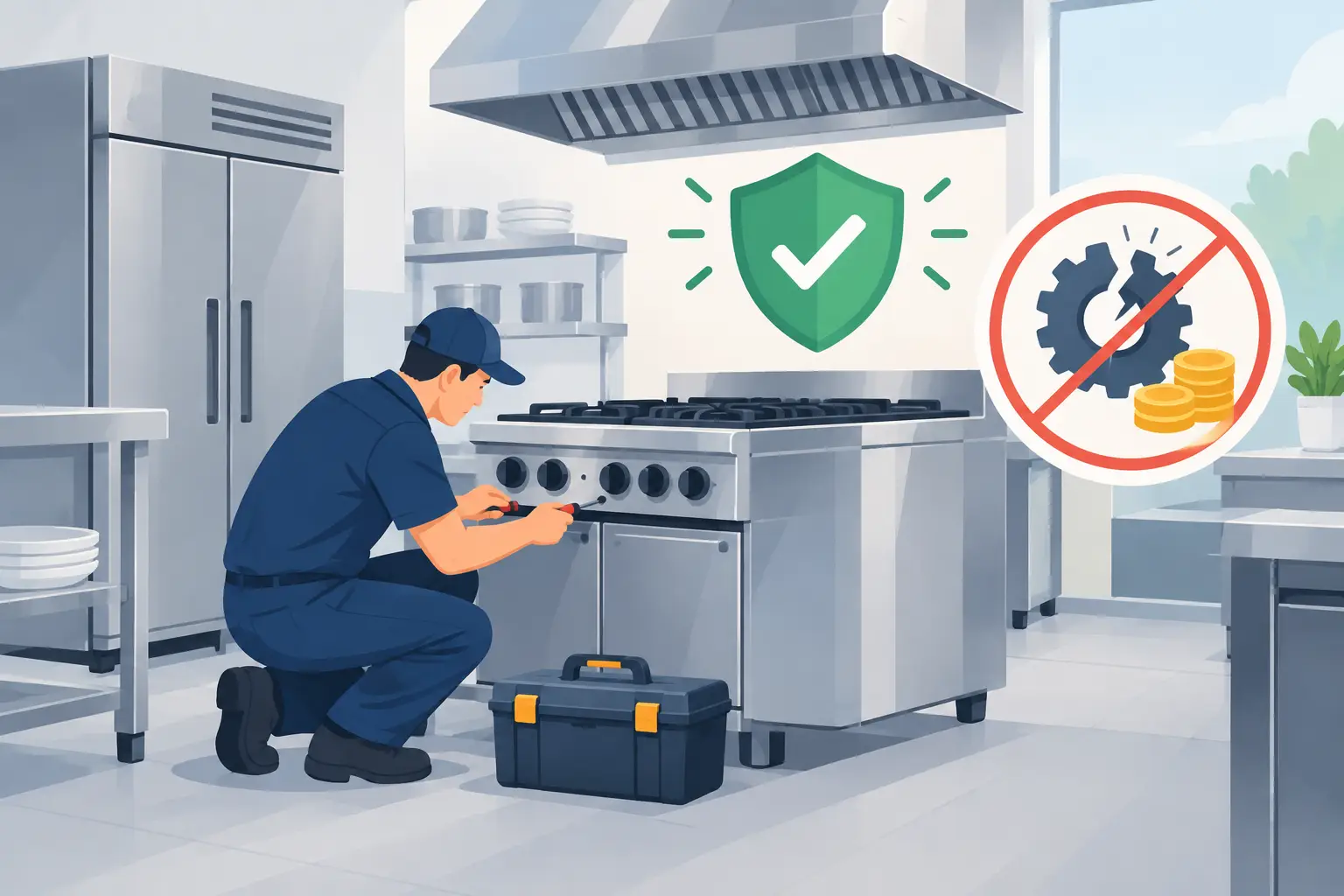
A walk-in that runs warm at 10:30 a.m. can become spoiled product, emergency labor, a stripped-down menu, and a bad service by dinner. The repair invoice is only one part of the hit. Preventing kitchen equipment breakdowns and hidden repair costs means treating every piece of equipment as part of daily kitchen control, not as a problem to deal with when it stops working.
Most failures give the kitchen a warning. A compressor starts cycling too often. The dishwasher leaves cloudy glassware. A fryer takes longer to recover. The warning gets ignored because prep is behind, a delivery is late, or nobody owns the check. Then a small maintenance job turns into a weekend callout and a piece of equipment sits idle when the kitchen needs it most.
The costs are bigger than the technician's invoice
A repair bill is easy to see. The costs around it usually are not. When a range, oven, refrigerator, ice machine, dishwasher, or extraction system fails, the kitchen can lose product, burn labor, delay tickets, buy emergency stock, and sell fewer covers. A temporary workaround may also damage another piece of equipment or create a food-safety risk.
Consider a reach-in cooler that cannot hold temperature. The direct cost may be a service call and a replacement part. The hidden costs include moving product during prep, discarding anything that has not stayed in range, sending someone out for ice, changing the station setup, and 86ing dishes that depend on that mise en place. If the repair happens during peak service, the cost is also lost pace and guest confidence.
That is why maintenance should sit beside food cost, waste, ordering, and prep. Each is a control that protects margin before the damage is done.
Preventing kitchen equipment breakdowns starts with ownership
Equipment does not need a complicated binder system. It needs a simple standard: every asset has a named owner, a basic check, a service history, and a clear trigger for escalation. If nobody is responsible for noticing a problem, the kitchen is relying on luck.
The owner is not necessarily the person who repairs the unit. It may be the opening chef, porter, bar lead, or kitchen manager. Their job is to complete the check, record an abnormal result, and make sure a known issue does not disappear into shift handover.
A useful check is specific enough to be acted on. “Check freezer” is vague. “Confirm freezer reads 0°F or below, door closes without resistance, and no ice is forming around the frame” tells the team what good looks like. The same principle applies to fryers, ovens, dish machines, ventilation, and ice machines.
Build checks into the work already happening
The best maintenance routine does not create a separate administrative job at the end of a long shift. Attach checks to work that already has to happen. Opening teams verify refrigeration temperatures. Closing teams clean fryer filtration equipment and inspect gaskets. The dish area checks chemical levels and wash temperatures before the first rack. Weekly deep-clean tasks include condenser areas, drains, filters, and moving parts where the manufacturer permits it.
For equipment that affects food safety or service capacity, use four levels of control:
- Every shift: temperature, visual condition, unusual noise, leaks, alarms, and basic operation.
- Weekly: cleaning tasks, seals, filters, drains, calibration checks, and signs of wear.
- Monthly: recorded performance review, such as recovery time, temperature consistency, or recurring error codes.
- Scheduled service: professional preventive work based on manufacturer guidance, age, usage, and local requirements.
The right frequency depends on the equipment and how hard it works. A fryer handling heavy volume needs more attention than one used only for a limited menu. A combi oven may need more disciplined water treatment in an area with hard water. The point is not to copy a generic calendar. Set standards around your actual operating conditions.
Record failures like operational data, not anecdotes
“Fridge was acting up again” is not enough information to manage a repair decision. Record the unit, date, symptom, temperature or error code, action taken, technician findings, downtime, and total cost. Add product loss and labor disruption where possible.
Over time, this tells you whether a unit has one isolated issue or has become a recurring drain on the business. It also exposes patterns that informal handovers miss. If three different team members report a dishwasher draining slowly over two weeks, that is a maintenance issue waiting to become a Friday-night shutdown.
A shared equipment-maintenance log gives managers a single view of open issues and completed work. Plate Margin can keep that accountability alongside waste, stock, prep, and ordering controls, so equipment issues are not buried in texts, notebooks, or a manager’s memory.
The record also makes vendor conversations cleaner. You can show when the fault started, what conditions were observed, and what work has already been completed. That reduces repeat diagnostics and helps you challenge vague recommendations.
Watch the early signals that kitchens often normalize
Kitchens are loud, hot, and busy, which makes it easy to normalize a machine that is no longer performing properly. Train the team to flag changes, not only failures. A new rattle, an odor, excess heat, inconsistent browning, a longer cycle, water on the floor, or an unexplained increase in ice buildup all deserve attention.
Temperature drift is especially expensive because it can compromise inventory before anyone sees a full failure. Do not rely solely on a digital display. Verify with calibrated thermometers and record readings at the right time. A refrigerator that looks fine after its door has been closed for an hour may struggle during active prep.
Utility costs can be another signal. A unit that runs constantly, takes too long to heat, or has poor seals can increase electricity or gas use well before it fails. You will not always be able to isolate the exact dollar amount, but a sudden change in performance is enough reason to inspect it.
Make repair-or-replace decisions before an emergency
The worst time to decide whether to replace a failing oven is during Saturday service. Emergency decisions favor whatever is available, not what fits the kitchen, utility capacity, production volume, or budget.
Review high-value equipment before it becomes critical. Look at age, repair frequency, downtime, parts availability, energy use, warranty status, and the role it plays in the menu. A ten-year-old unit with one inexpensive repair may still be a sensible asset. A newer unit with repeated electronic faults and long parts delays may not be.
Do not judge the decision by repair cost alone. Compare the likely annual repair spend with the cost of downtime and the operational impact of a failure. If the only fryer goes down, the menu may lose a major category. If one of three refrigeration units fails, you may have more room to plan. Criticality matters.
Keep a replacement plan for the equipment that would stop service, threaten food safety, or force major menu changes. Include model requirements, dimensions, electrical or gas needs, lead times, and a realistic installed cost. That preparation turns a crisis purchase into a controlled capital decision.
Protect equipment through better prep and ordering
Maintenance is not only a technician issue. Poor prep discipline and loose ordering can overload the equipment the team depends on. Overfilled reach-ins restrict airflow. Hot food placed in refrigeration pushes temperatures up. Dirty sheet pans and excess grease create avoidable wear. Ordering too much stock forces product into spaces never meant to hold it.
This is where kitchen systems connect. Forecasting demand correctly helps set sensible par levels. Accurate prep lists prevent last-minute batch cooking that overloads cooling capacity. Supplier-aware ordering helps avoid buying stock that creates a storage problem. The goal is not merely to keep the equipment clean. It is to stop the operation from asking it to do work it was not set up to handle.
When menu sales, bookings, recipes, and prep are visible in one place, the team can plan production with the actual service ahead of them. That reduces the common pattern of panic prep, crowded refrigeration, and rushed closing checks.
Give the team permission to act early
A culture of control makes it safe for a cook or dishwasher to report a small fault without being dismissed as fussy. Define what they can solve through cleaning or routine adjustment, what needs manager review, and what requires a technician immediately. If a refrigeration unit is outside its safe range, for example, the response should be clear: protect product, move it if needed, document the reading, and escalate.
Do not reward teams for “getting through service” by working around serious faults without reporting them. That habit hides the true cost until the equipment finally fails. Good kitchens do not wait for a breakdown to prove they needed a system. They spot the first bad reading, make the call, and keep the next service from paying for it.