Using Smart Prep Lists to Cut Labor Hours
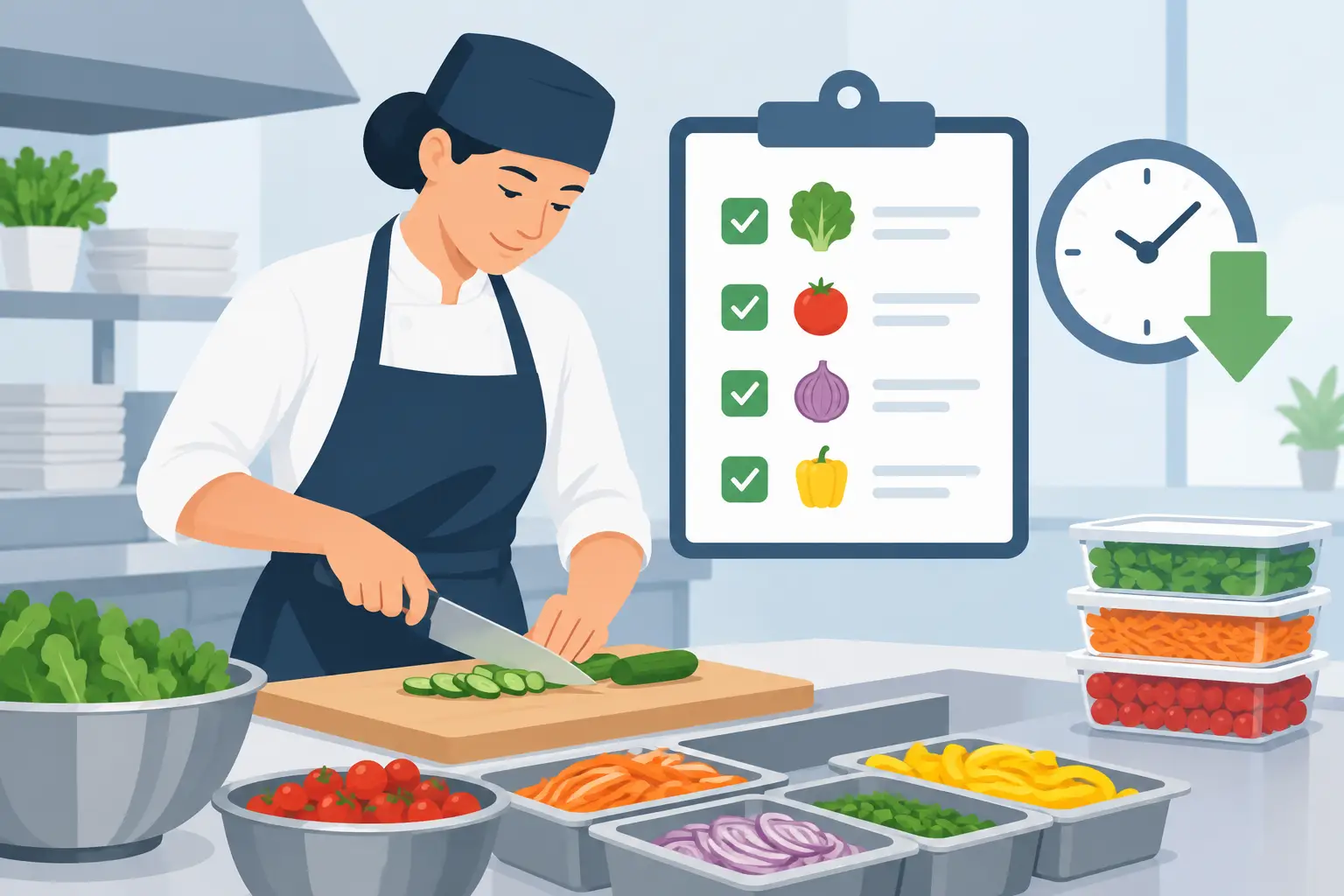
The expensive part of prep is rarely the knife work. It is the cook who starts a batch that was already made, the chef who stops to recalculate a par, and the team that preps for last Tuesday because nobody adjusted the list for a private party. Using smart prep lists to cut labor hours means removing those decisions before the shift starts.
A good prep list does not tell a kitchen to make more food. It tells the right person to make the exact amount required, in the right sequence, using current recipes, stock, sales, and bookings. That distinction matters. Labor control is not about pushing cooks to move faster. It is about stopping the work that should never have existed.
Why static prep lists waste paid hours
A handwritten list can work in a small, predictable kitchen. But it breaks down as soon as covers change, a menu item sells harder than expected, a function is added, or yesterday's leftovers are not counted properly. The list still looks organized on the wall, while the numbers behind it are wrong.
That creates three familiar labor drains. First, cooks overproduce because the instruction is vague: prep six pans of something rather than produce enough portions to meet an actual need. Second, cooks underproduce, then interrupt service to make emergency batches. Third, a chef or manager becomes the human calculator, answering the same questions all morning: How much do we have? How much do we need? What can wait?
Those interruptions are labor hours. They rarely appear as a separate line on a payroll report, but they show up in late prep, overtime, rushed handoffs, and a team that never gets ahead of the day.
Smart prep lists start with a reliable number
A smart prep list begins with a target quantity, not a vague instruction. To produce that target, the kitchen needs three connected inputs: forecast demand, the current amount on hand, and the recipe yield.
Forecast demand should reflect more than an average Tuesday. A lunch rush, a sold-out event, a holiday weekend, weather, reservations, and catering orders all change what the kitchen needs. If the forecast says 120 portions of a dish are likely to sell, and 35 finished portions are already available, the prep target is not a guess. The team needs 85 portions, adjusted for the buffer your operation has chosen.
Recipe yield translates that target into work. If one batch makes 20 portions, the list should tell the cook to make 4.25 batches or, where practical, four batches plus a defined top-up. It should also show the ingredient quantities and method from the approved recipe. No conversions on the fly. No separate recipe binder with a different yield than the one used for ordering.
This is where prep labor becomes predictable. The list is no longer a reminder pad. It is the final output of kitchen data that has already done the math.
Use service units, not vague containers
"Make two tubs" is only useful if every cook knows the tub size, the portion yield, and the current stock inside it. Often, they do not. Service units keep the instruction tied to how the product is actually sold or used: portions, skewers, quarts, hotel pans, or batch yields.
Containers still matter for storage and setup, but they should not replace a production target. A prep list that says "48 burger patties" leaves less room for interpretation than one that says "one tub of patties." The more precise the output, the less management time is needed to correct it later.
Build the list around the way cooks actually work
A mathematically correct list can still fail if it ignores the prep shift. Cooks need priorities, dependencies, and a clear owner. Stocks, braises, doughs, and marinades need to start early. Quick garnish work can wait. Items that support several dishes should be visible as shared production, not repeated under every menu item.
Organize prep by station or person, then sequence it by deadline. The garde manger cook should see what must be ready for lunch first, what can be completed before dinner, and what needs another station's output before it can begin. This makes the list usable during a busy morning, not just accurate when it is printed.
A practical smart prep list should answer five questions without a manager standing beside it:
- What needs to be made?
- How much is needed?
- What is already available?
- When does it need to be ready?
- Who owns the task?
Keep the language specific. "Prep vinaigrette" invites a question. "Make 3 quarts citrus vinaigrette for 96 salad portions, ready by 10:30 a.m." gives a cook a job they can finish and a chef a result they can verify.
Cut duplication before asking the team to work harder
The fastest labor savings often come from finding duplicate prep. A roasted tomato component may be used in a pasta, a brunch dish, and a catering platter. If each station prep list treats it as a separate item, the kitchen can make too much, use different methods, or lose time transferring product between areas.
Build prep from the recipe component upward. When a shared sub-recipe feeds several menu items, aggregate the demand into one production task. The kitchen makes the total amount once, labels it once, and allocates it where needed.
The same rule applies to sauces, pickles, doughs, spice blends, stocks, and garnishes. It also improves costing. If the component changes, every recipe using it should update, rather than leaving old prep instructions and stale food costs in circulation.
That connected workflow is the practical value of a single source of truth. In Plate Margin, a recipe change can flow into current costs, prep quantities, and ordering requirements instead of forcing the team to update three spreadsheets and a clipboard.
Account for what is already in the walk-in
Smart prep does not mean blindly trusting theoretical inventory. A list is only as good as the on-hand figure behind it. If two full pans of soup are cooling, they need to be counted. If yesterday's herb oil is past its usable window, it should not reduce today's prep target. If the line says there are 30 portions but the container holds 18, the count needs correcting before the list goes live.
This requires a simple discipline: define what counts as usable stock. Set rules for shelf life, quality, labels, and partial containers. Then make the closing or opening count part of the workflow, not a task that gets skipped when the shift is busy.
There is a trade-off here. Counting every ounce of every item can cost more labor than it saves. Focus on high-value ingredients, labor-intensive components, fast-moving menu items, and products where shortages create service pain. A café may count baked goods and prepared proteins daily, while a full-service restaurant may need a tighter count on sauces, butchery, and composed components.
Let forecasts change the prep, not just the schedule
Many kitchens forecast labor but leave prep pars fixed. That misses the point. If bookings tell you Saturday will be 30 percent busier than normal, the prep list should change with it. Otherwise, the kitchen will schedule extra staff and then spend service scrambling because production was based on an average day.
The opposite is equally useful. When projected covers are down, smart prep protects labor and product by reducing batches before they are made. This is not about starving the line. It is about using a deliberate buffer, based on the item's sales pattern and how quickly it can be replenished.
A high-volume dressing with a two-minute batch time needs a different buffer than a six-hour braise or a delicate garnish that cannot be rushed at 6:45 p.m. Pars are not guesswork, but they are not identical for every product either. Build the buffer around risk, lead time, and the cost of running short.
Measure the labor you stop spending
Do not judge a smarter prep process only by whether the list looks cleaner. Track whether it changes the work. Watch prep shift finish times, emergency prep during service, overtime, waste from prepared product, and the number of manager interventions needed before opening.
Give the team a way to mark items completed, short, overproduced, or not needed. Those exceptions are useful. If the same item is repeatedly left over, the par is too high or the forecast is off. If the same component is repeatedly rushed, the yield, buffer, or production deadline needs work.
After a few weeks, you should see which prep tasks are genuinely variable and which ones are stable enough to standardize. That is where labor planning gets better. Not by applying one percentage to every day, but by seeing the real demand and production pattern behind the shift.
The goal is a prep room where cooks arrive to clear instructions, chefs spend less time recalculating, and service starts with what it actually needs. When the numbers are current, prep becomes controlled production instead of a daily argument with the walk-in.