Restaurant Supplier Price Tracking That Holds Margin
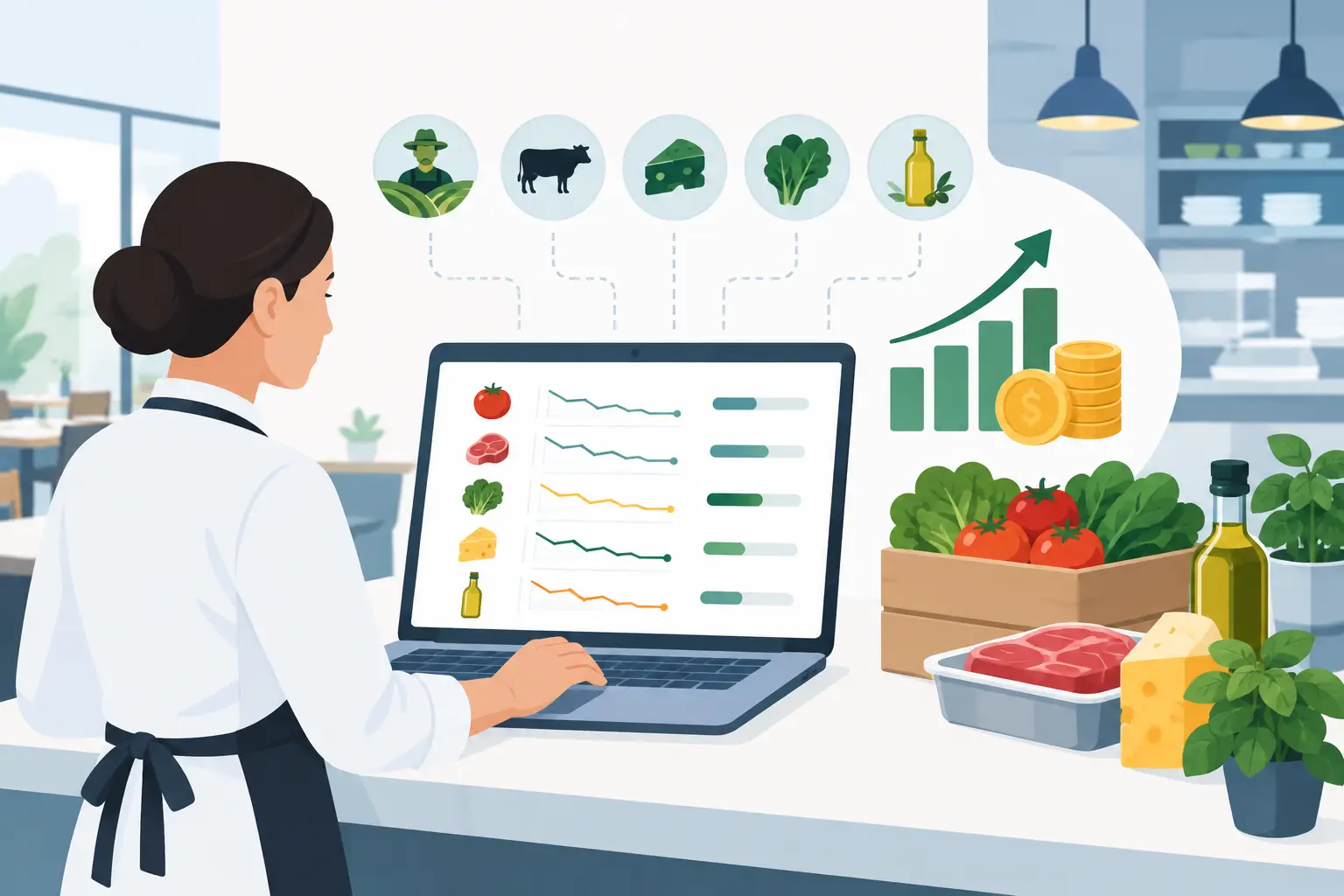
A case of chicken arrives 12% higher than last week. The invoice gets filed, the prep still gets done, and the menu price stays the same. By the time that increase appears in a monthly food-cost report, the margin has already left the building. Restaurant supplier price tracking is how a kitchen catches that movement before the invoice becomes a bad month.
This is not about creating more admin for chefs. It is about making sure the price paid for an ingredient is the price used in recipe costing, ordering decisions, and menu analysis. If costs move but recipes stay frozen in a spreadsheet, every decision built on those recipes becomes less reliable.
Restaurant Supplier Price Tracking Starts With the Right Unit
A supplier price on its own is not useful enough. A 15-pound case of tomatoes, a six-pack of 32-ounce cans, and a 50-pound bag of flour all need to resolve into the unit actually used in the recipe. If a sauce uses 5 ounces of canned tomato, the kitchen needs the usable cost per ounce, not just the number printed at the bottom of the invoice.
That sounds basic, but unit mismatches are where quiet costing errors begin. A chef may cost an item by each while purchasing by case. Trim, yield, drain weight, pack size, and conversion all matter. A case price can go down while the cost per usable ounce goes up because the supplier changed the pack. If the system only records the case total, it will miss the real change.
Track each product against a consistent purchase unit, then connect it to a recipe unit. Record yields where they genuinely affect the plate cost. Whole fish, trimmed brisket, peeled shrimp, and produce with meaningful waste should not be treated as if every purchased pound reaches the guest.
The aim is costing to the cent, not because a kitchen needs false precision, but because small errors repeated across a busy service become real money.
The Invoice Is the Cost Signal
Catalog pricing is useful for planning. Invoice pricing is what the kitchen actually paid. The difference matters when a distributor applies a market adjustment, substitutes a product, changes a pack, or adds a price that was never discussed.
A working process should make invoices the regular trigger for price updates. That can be a quick receiving task: compare the delivered item and price against the last known cost, confirm any substitution, and update the ingredient record when it changed. The more often this happens, the less painful it is. Waiting until month-end turns a five-minute check into a forensic exercise.
Not every one-cent movement needs an immediate menu review. Set a practical threshold based on the ingredient and the volume sold. A two-cent increase in a garnish may be noise. A 40-cent increase in chicken, avocado, beef, butter, or cooking oil may affect several high-volume dishes at once.
The useful question is not simply, “Did this price change?” It is, “What does this change touch?”
One ingredient should update every dependent recipe
A kitchen should not have to hunt through recipe tabs when the cost of feta rises. The ingredient price should feed every recipe using feta, then refresh the plate cost, food-cost percentage, and menu contribution view. Otherwise, teams know a supplier cost changed but cannot see which dishes lost their margin.
This connection is the difference between recording data and running a control. A single ingredient can appear in a salad, flatbread, catering platter, staff meal, and retail grab-and-go item. Manual updates invite missed recipes, especially when menus change frequently or several venues share a product.
Plate Margin is built around that connected workflow: update an ingredient cost once, and the associated recipes, menus, ordering requirements, and operational views have the current source data. The point is not another dashboard. It is fewer places for the same number to go stale.
Track Supplier Prices by Product, Not by Memory
Most kitchens already know when the big items are getting expensive. The problem is that memory is inconsistent, especially through a busy week. People remember the shocking jump in tenderloin and miss the steady climb in dairy, fryer oil, disposables, herbs, and dry goods.
A usable price history gives context. It lets a chef see whether an increase is a one-off invoice issue, a seasonal pattern, or a new normal. That distinction changes the response. A temporary produce spike may call for a short-term special adjustment. A sustained increase may require a new supplier quote, a recipe revision, or a menu price change.
Track the supplier, item description, pack size, delivered price, and date. Note substitutions and product specification changes. If two suppliers quote comparable products, normalize them to the same usable unit before declaring one cheaper. The lowest case price is not always the lowest food cost when quality, yield, freight, or pack size differ.
For multi-venue operators, keep product definitions standardized. If one location costs “chicken breast” as a 40-pound case and another uses a premium air-chilled pack, the group does not have a purchasing problem yet. It has a naming and specification problem. Comparable reporting only works when the product records are comparable.
Let Price Changes Drive a Kitchen Decision
Price tracking has value only when it leads to an action. There are usually four levers: negotiate, buy differently, change the recipe, or change the selling price. The right choice depends on guest expectations, sales mix, and how much of the increase the kitchen can absorb.
Negotiating can work when volume is meaningful and the product specification is clear. Buying differently may mean moving to another approved supplier, changing pack sizes, or consolidating purchases. But a cheaper replacement is not automatically a win. If it creates more trim, more prep time, weaker consistency, or poor guest response, the apparent saving may disappear.
Recipe changes deserve the same discipline. Reducing protein portions, replacing an ingredient, or changing a garnish can protect margin, but only if the updated recipe is tested, documented, and communicated. Informal changes made during service create inconsistent plates and unreliable costs. If a dish changes, the recipe should change with it.
Menu price changes are sometimes necessary, but they should not be the first reflex or the last resort. Look at the complete menu. A signature dish with a lower percentage may still deliver strong gross profit dollars and bring guests through the door. A high food-cost item that sells slowly and contributes little is a different conversation. Price tracking tells you where the pressure is. Menu engineering tells you what that pressure means.
Restaurant Supplier Price Tracking Should Inform Ordering
The purchasing team needs current costs, but it also needs the right quantities. Ordering too much of a suddenly cheaper item can still create waste. Ordering too little of a rising-cost item can force last-minute buying at a worse price. Cost control and stock control are the same operational conversation.
When recipe data, bookings, projected sales, current stock, and supplier pack sizes sit together, ordering becomes more grounded. The kitchen can calculate what it needs for expected covers, account for what is already on hand, and buy in the units suppliers actually sell. Par levels are not guesswork when they are tied to demand and recipes.
This also makes price changes easier to prioritize. If a product costs more but appears in a low-volume recipe, it may not need urgent attention. If it is used across breakfast, lunch, catering, and prep production, it deserves a decision before the next order is placed.
Build a Cadence People Will Actually Keep
The best price-tracking process is not the most elaborate one. It is the one the chef, receiver, or kitchen manager can maintain during a real week. Assign ownership for invoice checks. Decide which changes require approval. Review major movements weekly, then review broader supplier trends and menu margin monthly.
Keep the process close to receiving and ordering, not buried in an end-of-month accounting task. The person seeing the delivery is often the first person who can spot a wrong pack, an unapproved substitute, or a price that does not match expectations.
Accuracy is a kitchen standard. When supplier costs are current, recipes are honest, ordering is calmer, and menu decisions have evidence behind them. Start with the ingredients that move the most money, make the update routine, and let every price change show its effect before the next service does.