Restaurant Ordering List Template That Works
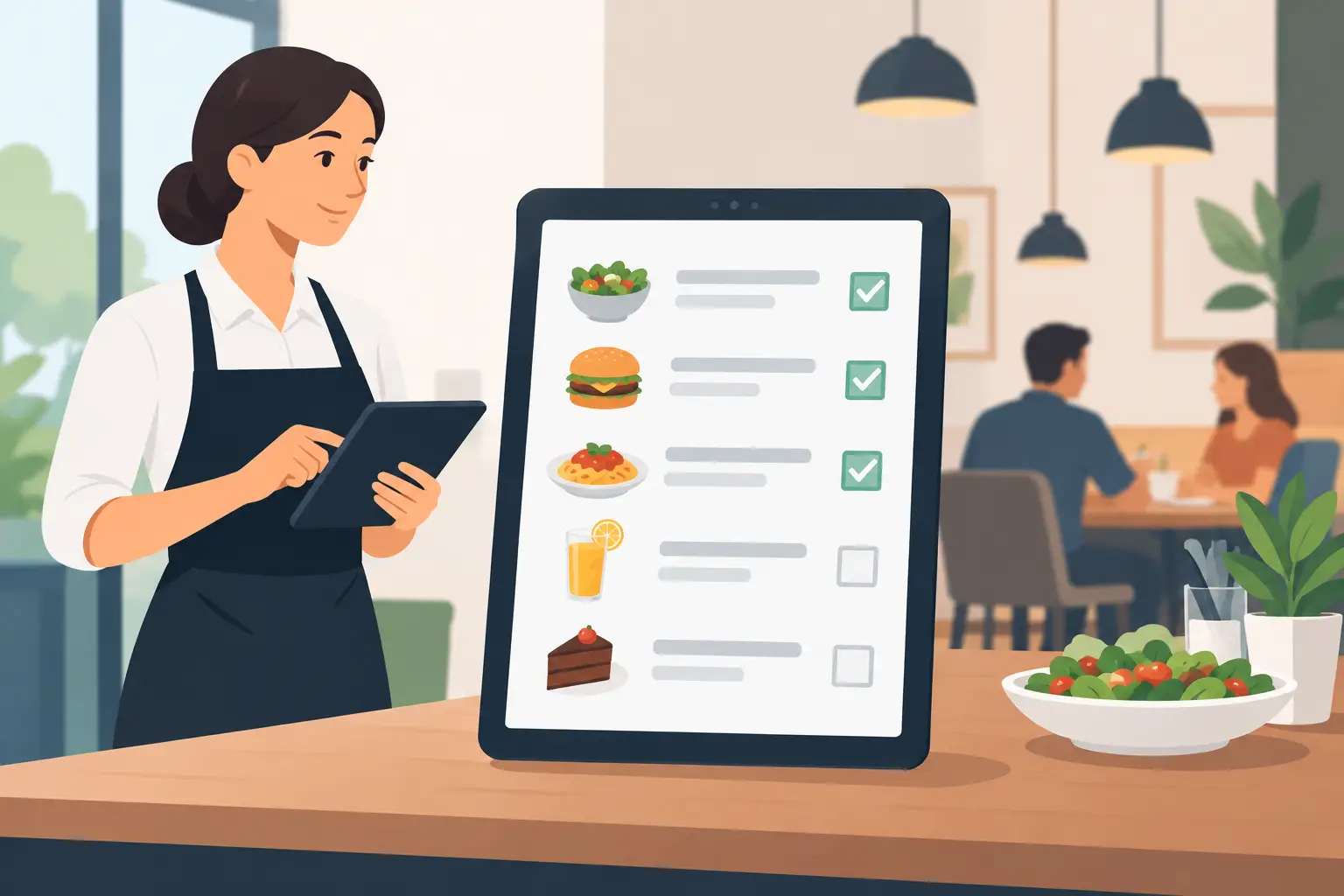
The order goes wrong long before the supplier truck arrives. It goes wrong when the chef orders from memory, when last week’s sales stand in for this weekend’s bookings, or when a case price changed and nobody caught it. A restaurant ordering list template gives the team a repeatable way to turn real kitchen demand into a controlled purchase order.
The useful version is not a static shopping list with a supplier logo at the top. It connects what you have, what you need, what is already on order, and what service is expected to sell. That is how ordering stops being a daily gamble with cash, storage, and food cost.
What a Restaurant Ordering List Template Must Do
An ordering template has one job: calculate the right quantity to buy for the next delivery window. To do that reliably, it needs more than an ingredient name and an empty quantity box.
Every line should identify the item, supplier, purchase unit, current on-hand stock, par level or forecast demand, quantity already due in, and the amount to order. Unit clarity matters. If chicken thighs are purchased by the 40-pound case but counted by the pound in storage, the template must make that conversion obvious. Otherwise, a team can follow the sheet exactly and still overbuy by a full case.
The core calculation is simple:
Order quantity = target stock level - on-hand stock - stock on order
But the target stock level is where kitchens either protect their margin or create excess. A fixed par can work for predictable operations, such as a weekday cafe with steady covers. A restaurant with events, weather-driven patio business, private dining, or a changing menu needs demand-based targets instead. The right order for 60 covers is not the right order for 180.
The fields that prevent expensive guesswork
A practical restaurant ordering list template should include these columns:
| Field | Why it belongs on the order list | | --- | --- | | Ingredient and specification | Prevents substitutes that change food cost or recipe consistency. | | Supplier and supplier item code | Keeps purchasing with approved vendors and makes reordering faster. | | Purchase unit and pack size | Stops confusion between eaches, pounds, gallons, cases, and bags. | | On-hand quantity | Shows what is physically available before more is bought. | | Target quantity | Sets the stock required for expected production and a sensible buffer. | | On-order quantity | Avoids double ordering after a delivery has been placed. | | Suggested order quantity | Gives the buyer a clear, checked number to purchase. | | Latest price and line total | Shows the cash and margin impact before the invoice does. |
You may also need delivery day, lead time, storage location, minimum order quantity, and a note field for seasonal availability. Do not add fields because a spreadsheet can hold them. Add them when they change a buying decision.
Build the Template From Recipes, Not Memory
Ordering is an output of production. That means the cleanest template starts with recipes and menu demand, not an ingredient brainstorm.
First, list every dish expected to sell in the ordering period. Use recent sales as a baseline, then adjust for reservations, catering orders, events, menu changes, day of week, and known demand shifts. A Friday dinner with 40 patio bookings should not be ordered like a rainy Tuesday just because last Friday was quiet.
Next, translate those expected sales into recipe ingredient requirements. If 80 orders of a burger need 5 ounces of ground beef each, the kitchen needs 25 pounds before allowing for trim, staff meal, or a realistic safety buffer. Repeat that process across every dish, then combine shared ingredients. Tomatoes may appear in salads, sauces, sandwiches, and garnishes. The ordering list needs one total, not four disconnected estimates.
Then subtract usable stock. “Usable” is the operative word. A half case of greens that will not survive the weekend should not count as available inventory. Neither should an open bag of flour stored without a label, or product allocated to a catering job. Good ordering depends on honest counts, not optimistic ones.
Finally, round according to how the supplier sells the product. If the kitchen needs 17 pounds of beef and cases hold 10 pounds, buying two cases may be correct. But check the next delivery and projected usage first. Rounding up without considering lead time is one of the easiest ways to fill a walk-in with slow-moving stock.
Separate Perishables From Shelf-Stable Buying
A single target-stock rule rarely works across every category. Produce, seafood, dairy, dry goods, disposables, and cleaning supplies behave differently in storage and on the menu.
Highly perishable ingredients should be ordered closer to forecast demand, with small buffers for normal variance. The risk is spoilage, quality loss, and rushed specials built to use up product. Shelf-stable goods can carry more coverage when delivery schedules are limited or prices are favorable, but even dry storage has a cost. Cash tied up in excess inventory is cash that cannot cover payroll, repairs, or a better-margin menu change.
This is also why the ordering template should show the last price paid. A line that looks routine can become a margin problem after a supplier increase. If avocado cost jumps 25%, the buyer needs visibility immediately, and the chef needs to know whether the dish price, portion, garnish, or supplier decision needs attention.
Give One Person Ownership, Then Build a Check
The best template still fails if five people can change it without a count, a reason, or a handoff. Assign ownership for counting, order creation, approval, and receiving. In a small restaurant, one chef may do all four. In a group operation, the roles may sit with a kitchen manager, chef, purchasing lead, and receiving team. The roles can differ. The accountability cannot.
The person creating the order should count stock at a consistent time, preferably after major prep and before the order cutoff. Counts taken during a chaotic lunch pickup are usually estimates dressed up as data. The approver should review unusually large quantities, price jumps, and items that exceed storage capacity or normal usage.
When the delivery arrives, compare what was ordered, delivered, credited, and invoiced. This closes the loop. If the order list says six cases but only five arrive, the next order calculation must reflect that shortage. If a substitute arrives at a higher price, recipe costing should change with it. Ordering, receiving, inventory, and costing are one operating system, whether they live in a spreadsheet or software.
When a Spreadsheet Template Is Enough
A spreadsheet can work for a single venue with a stable menu, limited supplier list, and a disciplined person maintaining it. It is cheap, flexible, and familiar. For a new operation, it can be the right place to establish units, pack sizes, pars, and counting habits.
The trade-off appears when information changes often. A spreadsheet does not naturally know that a recipe was revised, a menu item was removed, a supplier price changed, or 75 additional guests were booked. Someone has to update each connected sheet manually. That is where copied formulas, outdated tabs, and version confusion start costing real money.
For active kitchens, a connected system is more reliable because the data moves once. In Plate Margin, recipe entries feed live costing, menu profitability, prep requirements, and supplier-aware ordering lists. When bookings change, expected demand can recalibrate the buy. When an ingredient price changes, the cost exposure is visible before the order becomes an invoice. That is not extra admin. It is the control a kitchen should already have.
Keep the Order List Useful on a Busy Day
A template only earns its place if a chef or manager can use it under pressure. Keep product names consistent with supplier descriptions. Group lines by supplier and storage area. Put frequently ordered items where the team expects them. Flag items with long lead times, minimums, or volatile pricing.
Review pars regularly, especially after menu changes, seasonal shifts, new vendors, or a pattern of waste. A par level is not a permanent fact. It is a working assumption that should be tested against sales, yields, delivery schedules, and what actually gets thrown away.
The goal is not to make ordering more complicated. It is to make every case, pound, bottle, and bag explain itself. When the list is built from recipes, real stock, and expected covers, the order becomes a clear kitchen decision instead of a hopeful one.