Restaurant Inventory That Protects Your Margin
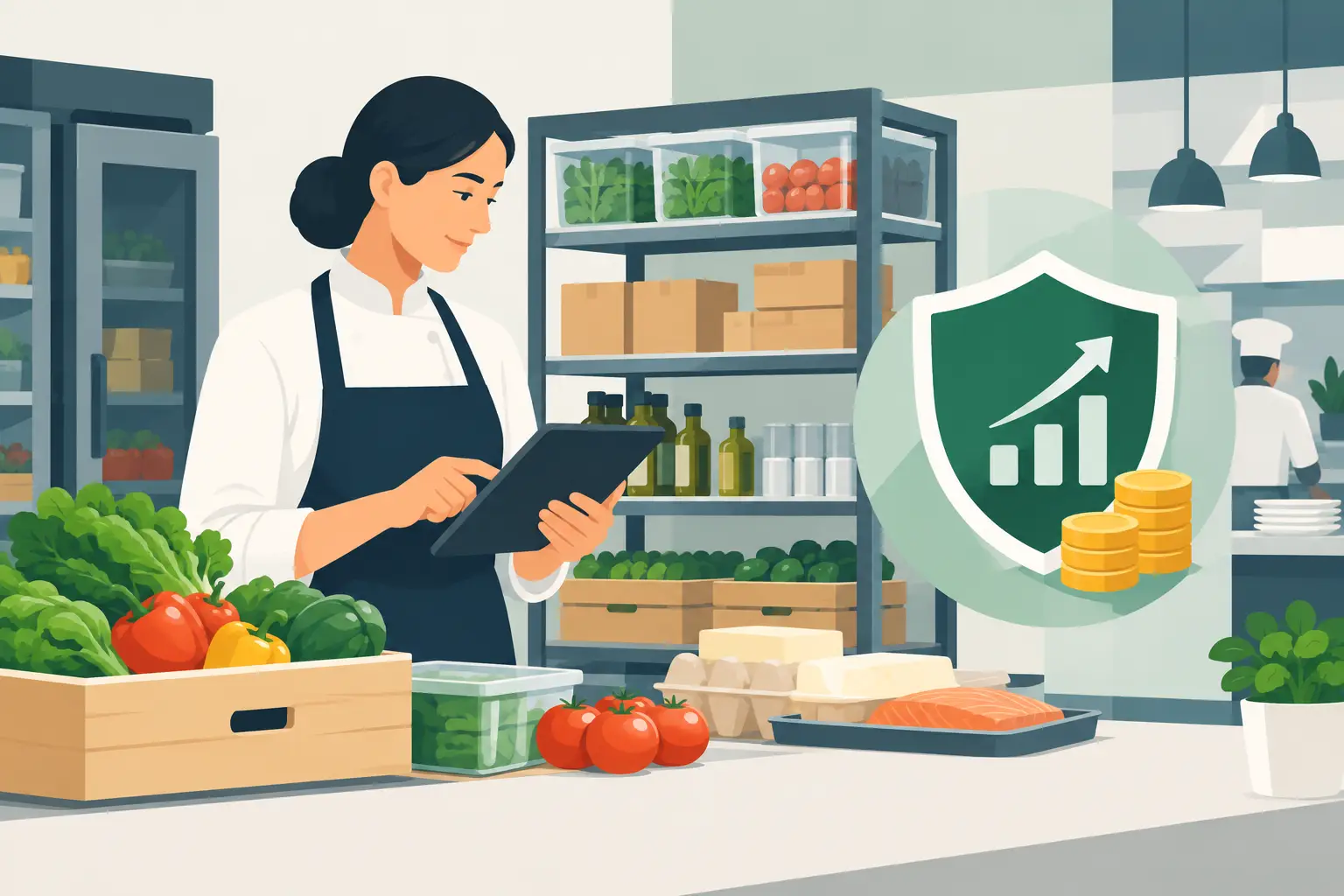
A restaurant inventory count can look clean on paper and still leave money walking out the back door. If the recipe cost is stale, the prep plan ignores covers, or the order is built from last week’s assumptions, the number in the stockroom is only part of the story.
Restaurant inventory is not a monthly accounting chore. It is the working control that connects what you buy, what you prep, what you sell, what you waste, and what remains. When those pieces are disconnected, kitchens over-order familiar items, run short on profitable dishes, and discover margin problems after the invoice does.
Restaurant Inventory Starts With a Usable Item List
The first mistake is treating every invoice line as an inventory system. Supplier invoices are useful records, but they are not a clean operational view of your kitchen. Product names change, pack sizes vary, and the same ingredient may arrive from different suppliers at different prices.
Build one clear ingredient record for each item you actually use. That record needs a purchase unit, a usable unit, a current price, and a yield where trimming, cooking loss, or drainage applies. A case of tomatoes, a five-pound bag of flour, and a bottle of cooking wine should each make sense in the units used by the recipe team.
This is where costing either becomes honest or starts drifting. If a recipe calls for 6 ounces of cooked chicken but inventory tracks raw cases without a yield, the plate cost is fiction. The same applies to fryer oil, herbs, proteins with trim loss, and anything bought in one unit but used in another.
Keep the item list practical. Your team should be able to count it quickly during a busy week, not decipher a finance department taxonomy. Group items by where they are stored and counted: walk-in, reach-in, dry storage, freezer, bar, prep kitchen. Count sheets that follow the physical path through the kitchen reduce missed items and make handoffs easier.
Count the Stock That Matters Most Often
Not every ingredient needs the same count frequency. High-value proteins, seafood, liquor, cooking oil, dairy, and fast-moving produce deserve more attention than a case of backup paper napkins. The right rhythm depends on volume, theft risk, volatility, and how quickly an item turns.
A busy restaurant may count key items daily, complete inventory weekly, and run a deeper month-end count for financial reporting. A catering operation may count before and after major events. A cafe may need close control of milk, coffee, pastries, and grab-and-go stock each day.
The goal is not more counting for its own sake. It is finding variance while it can still be explained. When chicken usage is off by 12 pounds yesterday, the chef can check portions, transfers, waste, staff meals, and receiving. When that same discrepancy surfaces four weeks later, it becomes a guess.
Make Recipe Data Drive Restaurant Inventory
Inventory only becomes useful when it has an expected usage number to compare against. That expectation starts with recipes.
Every sellable dish should have a standardized recipe with ingredient quantities, yields, portions, and a current menu price. When sales data comes in, those recipes convert covers and menu mix into theoretical usage: what the kitchen should have used if every portion followed the standard and every sale was recorded correctly.
Actual usage comes from a simple equation: beginning inventory plus purchases, minus ending inventory. Compare actual usage with theoretical usage and the difference becomes a conversation worth having. It may be waste. It may be over-portioning. It may be an unrecorded transfer, a receiving error, a comp, a broken scale, or a recipe that no longer reflects how the dish is made.
That distinction matters. A high food cost percentage does not tell a chef what to fix. Variance by ingredient or recipe category gives the team somewhere specific to look.
A recipe change should also travel through the rest of the operation. If the burger moves from a 6-ounce patty to an 8-ounce patty, its cost, food-cost percentage, prep demand, ordering needs, and menu profitability all change. Keeping those decisions in separate spreadsheets creates delay and inconsistency. One recipe source of truth keeps the kitchen working from the same facts.
Order From Demand, Not Habit
“We always buy two cases” is not a par level. It is a habit, and habits get expensive when reservations rise, weather changes, a banquet appears, or a menu item starts selling faster than expected.
A useful order starts with on-hand stock, open orders, lead time, shelf life, forecast demand, and the prep already planned. For an item with a three-day delivery lead, the kitchen needs enough product to cover expected use through the next delivery, plus a deliberate buffer for normal variation. That buffer should be based on reality, not anxiety.
Bookings matter because demand is not flat. If Saturday has 180 covers on the books and a private event for 40, the kitchen should not prep and order as if it were an ordinary Friday. Sales history provides the pattern; current bookings adjust it to what is actually coming.
This is especially important for perishables. Over-ordering produce, dairy, fish, and prepared components can create a full walk-in that looks safe but is quietly becoming waste. Under-ordering forces last-minute substitutions, emergency buying, and 86s during service. Neither protects the guest experience or the margin.
Par levels are not guesswork. They are a documented decision that should be reviewed when sales patterns, supplier schedules, menu mix, or service style changes.
Receiving Is Where Inventory Accuracy Begins
A perfect order list cannot fix a bad receiving process. Check deliveries against the purchase order while the driver is still there. Confirm the quantity, pack size, price, quality, and temperature where relevant. Record credits and substitutions immediately.
If you receive a 15-pound case but enter a 20-pound case, the inventory value is wrong before the product reaches the shelf. If a supplier price climbs and nobody updates the ingredient cost, the menu may look profitable right up until the next food-cost report says otherwise.
Assign clear ownership. One person receives, but the information must reach whoever manages costs and recipes. The fastest kitchens do not rely on memory or a pile of invoices near the office printer.
Use Variance to Improve the Kitchen, Not Blame It
Inventory controls fail when they become a monthly exercise in finding someone to blame. A strong process asks what happened, verifies the evidence, and corrects the workflow.
Start with the largest dollar variances, not the longest list of small discrepancies. A two-ounce over-portion on a high-volume steak or salmon dish can cost more than several minor dry-goods variances combined. Check whether the recipe is current, whether portion tools are being used, whether yields are realistic, and whether waste is being logged.
Waste logging should be specific enough to be useful. “Waste” is not a reason. Spoilage, overproduction, trim, burn, guest return, dropped item, and equipment failure point to different fixes. If prepared sauces are being discarded every Sunday, the answer may be a smaller batch plan. If dairy keeps spoiling, review storage temperature, delivery timing, and pars before assuming the team is careless.
The same discipline applies to excess stock. Too much inventory ties up cash, crowds storage, increases spoilage risk, and makes counts harder. A kitchen does need safety stock, particularly with unreliable suppliers or long lead times. But safety stock should be visible and intentional.
Put the Count Into a Weekly Operating Rhythm
The best restaurant inventory system is one the team can repeat under pressure. Set a consistent count time, lock down movement during the count where possible, and use the same units every week. If stock must move, record the transfer rather than hoping it will be remembered later.
Then review the result while it is fresh. Compare actual and theoretical usage, look at top dollar variances, check price changes, and adjust the next order and prep plan. This turns inventory from a backward-looking report into a forward-looking kitchen decision.
For multi-venue operators, standardization is even more valuable. Shared recipes, supplier-aware ingredient records, and consistent count methods make it possible to see whether one location has a real operational issue or simply measures differently. Plate Margin is built around that connected workflow: a recipe update can flow into costing, menu analysis, forecasting, prep, and ordering instead of being re-entered across separate tools.
The numbers will never be perfect. Deliveries arrive late, cooks make mistakes, guests change their orders, and a refrigerator can fail at the worst possible time. The standard is not perfection. It is a system accurate enough to expose the problem early, clear enough to assign action, and simple enough that the kitchen uses it every week.
Start with one category that regularly surprises you, count it consistently, tie it to live recipes, and act on the variance before the next order goes out.