Restaurant Allergen Matrix Template That Works
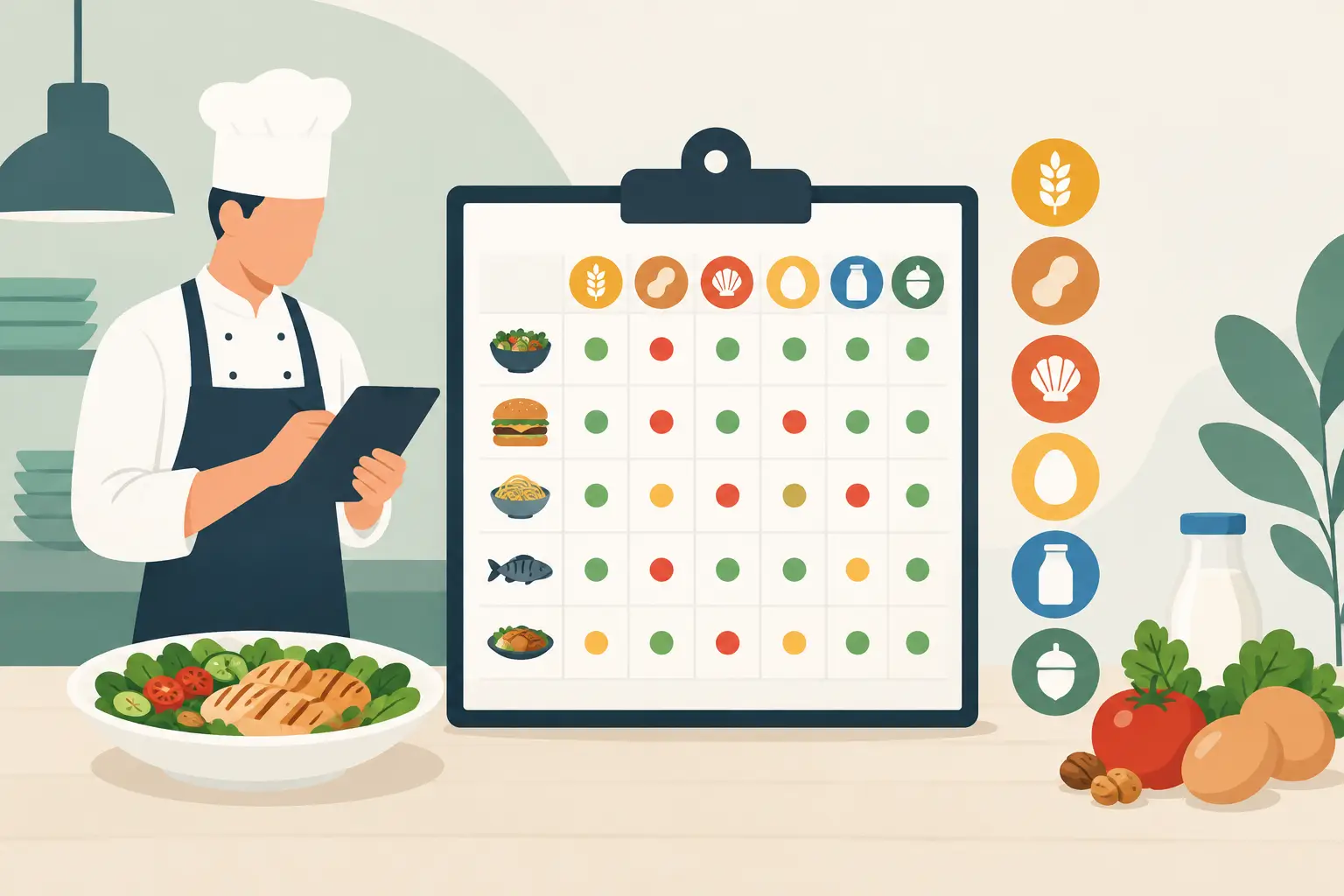
A guest tells the server they have a sesame allergy just as the pass starts filling up. The answer cannot live in a chef's memory, an old spreadsheet, or a menu description that skips the garnish. A restaurant allergen matrix template gives the team one clear place to check what is in every dish, what can be changed, and where cross-contact risk remains.
That only works if the matrix is built from the same recipe information used to prep, cost, order, and serve. An allergen sheet that is separate from the working recipe book goes stale fast. One supplier substitution, sauce change, or new garnish can make it wrong before the next service.
What an Allergen Matrix Must Actually Show
A useful matrix is not a legal-looking grid of checkmarks. It is a service tool. Front of house needs a fast, plain-language answer. The chef needs to know which component causes the issue and whether a safe modification is realistic during service. Management needs confidence that every venue is working from the same current information.
For US operations, start with the nine major food allergens: milk, eggs, fish, crustacean shellfish, tree nuts, peanuts, wheat, soy, and sesame. But do not stop at a simple yes-or-no answer. A dish may contain an allergen in a dressing, stock, spice blend, breading, finishing butter, or pre-made component that does not appear in its menu description.
Your matrix should also separate three very different situations: an allergen is intentionally in the dish, it can be removed or replaced through a tested modification, or the dish has a cross-contact risk that makes it unsuitable. Treating all three as the same thing creates bad calls at the table.
Restaurant Allergen Matrix Template Fields
The basic grid should be quick to scan, but the underlying record needs enough detail to support a real kitchen decision. Use one row per sellable dish, then attach it to the current recipe and its components.
| Menu item | Contains | Allergen source | Approved modification | Cross-contact or service note | Last reviewed | | --- | --- | --- | --- | --- | --- | | Grilled chicken salad | Milk, sesame | Feta, tahini dressing | Serve without feta and dressing | Use clean tongs and bowl | May 12 | | Fish and chips | Fish, wheat, egg | Cod, batter, tartar sauce | No safe wheat-free modification | Shared fryer with breaded items | May 12 | | Mushroom risotto | Milk | Parmesan, butter | Vegan version only if separately prepped | Confirm stock used that day | May 12 |
The allergen source column is where this template becomes useful. “Contains milk” is not enough when the guest asks whether the butter can be omitted but the finished sauce also contains cream. Name the component. If the answer depends on the prep batch or a particular supplier item, say that too.
The approved modification field should only show changes your kitchen can execute consistently. “Ask chef” is not a process. If removing a garnish works, write it. If a dish requires a separate prep, separate pan, and different fryer to be suitable, it is not a casual table-side modification. Mark it accordingly.
Use Clear Status Language
Choose a small set of terms and use them across every menu and location. “Contains” means the allergen is part of the recipe. “Can be modified” means there is a documented, tested change. “Cross-contact risk” means the kitchen cannot promise the dish is appropriate for a guest avoiding that allergen. “Not suitable” removes guesswork when a modification would compromise safety or service.
Avoid vague labels such as “allergen friendly” or “may contain” as blanket language. They do not tell the server what to do, and they can hide the difference between a known ingredient and a process risk. Specificity protects the guest and keeps the team from making promises the kitchen cannot support.
Build the Matrix From Recipe Data, Not Memory
Start with the recipe, including every sub-recipe. A burger may look straightforward until you account for the bun, seasoning, aioli, pickles, cheese, fries, and fryer oil. A cocktail menu can carry allergens in syrups, foams, bitters, and garnish. Catering menus need the same treatment, especially when components are batched in advance and served in different formats.
First, standardize ingredient names and supplier products. “Soy sauce” is not enough if one brand contains wheat and another does not. Record the specific purchased item and check its current specification. Composite products deserve extra attention: spice blends, bouillon, sauces, pastry, cured meats, plant-based substitutes, and desserts regularly carry allergens that are easy to miss.
Next, map each ingredient into the recipes that use it. This is the point where a single source of truth earns its keep. When an ingredient is swapped or a recipe changes, every affected menu item should be flagged for review. With Plate Margin, recipe data can feed allergen matrices alongside costing, prep, and ordering, so the kitchen is not maintaining the same facts in four separate files.
Then validate service reality. The written recipe may say a dish is sesame-free, while the actual pass shares squeeze bottles, boards, fryers, or tongs with sesame-containing items. Walk the line with the matrix in hand. Check prep benches, storage, fryer assignments, garnish stations, and cleaning practices. The answer on the sheet must match what happens at 8:30 p.m. on a full Saturday.
Finally, assign ownership. One person should be responsible for reviewing recipe and supplier changes, but the whole team needs access to the current matrix. Put a review date on every version. If a product arrives with a different label, staff need a clear rule: stop, verify, and update before it enters prep.
Make the Matrix Part of the Service Flow
The matrix should be available where decisions happen, not buried in an office folder. Hosts and servers need a clean reference before they make a recommendation. Expo needs to see allergy notes clearly. The chef calling the pass needs enough detail to decide whether a modified dish is possible without guessing.
A practical service sequence is simple: the server records the stated allergy, checks the current matrix, confirms any approved modification with the kitchen, and communicates the final decision back to the guest without overpromising. The ticket should identify the allergen, not just say “allergy.” “No sesame - confirmed modification” gives the kitchen a usable instruction. “Allergy” does not.
For a high-risk request, the correct answer may be no. That is not poor hospitality. Serving a guest a dish your operation cannot safely control is worse than guiding them toward a suitable option. Train the team to be direct, calm, and specific.
Where Allergen Matrices Usually Break
Most failures are not caused by the template itself. They happen when the template is treated as a one-time compliance task instead of a living kitchen control.
- A seasonal menu is added without entering complete recipes and sub-recipes first.
- A supplier sends a substitute product, and nobody checks the label before prep begins.
- One generic matrix is shared across multiple locations even though fryer use, prep setup, or local suppliers differ.
- Staff are told a dish is modifiable, but the modification has never been tested during a busy service.
There is a trade-off here. The more detail you capture, the more confidence the team has. But a sprawling document that no one can read on the pass is not useful either. Keep the service-facing matrix focused on decisions, then retain full recipes, supplier details, and preparation controls behind it.
Review the matrix whenever a menu changes, a recipe is revised, a new supplier item is approved, or kitchen process changes. Food cost reviews are a useful trigger as well. If you are checking a recipe because the chicken price moved or a portion changed, check its allergen information at the same time. Accuracy should not wait for an incident.
A guest's allergy question is a test of kitchen control. When the answer comes from current recipe data, verified supplier information, and an honest view of cross-contact risk, the team can respond with clarity instead of hesitation. That is the standard: know what is on the plate before it reaches the table.