Multi Location Restaurant Management Software
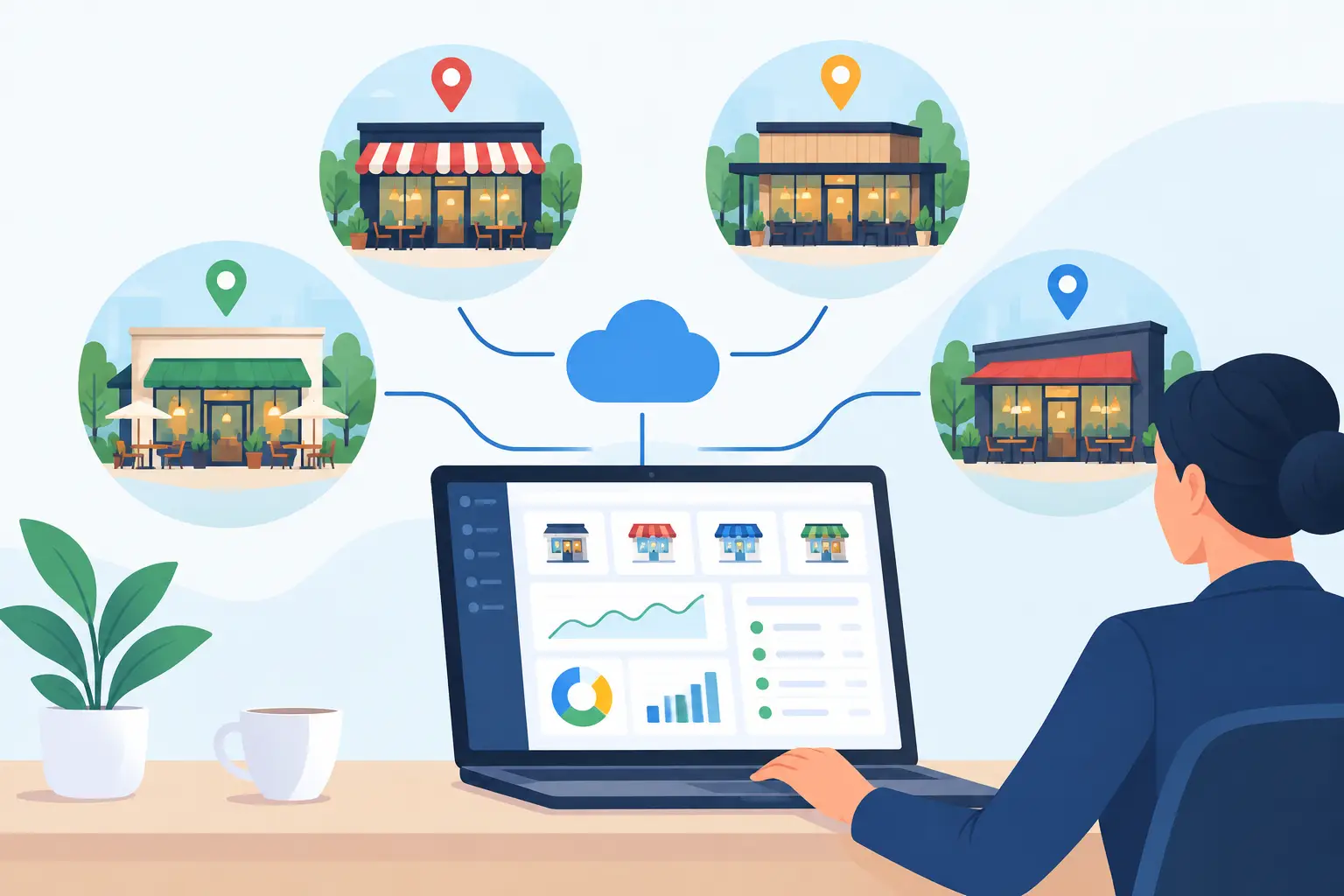
A second location should not mean a second set of numbers, recipe files, ordering habits, and margin problems. But that is how many groups end up operating. One kitchen costs a burger at $4.12, another uses an old spec, and a third orders to a par level nobody can explain. Multi location restaurant management software exists to stop that drift before it reaches the invoice, the pass, or the monthly P&L.
The useful kind is not another dashboard for head office. It is a working kitchen system that carries the same accurate data from a recipe into menu pricing, prep, purchasing, and daily accountability. When each location is busy, that connection is what keeps standards real.
What multi location restaurant management software must control
Multi-unit operations do not fail because teams cannot open a spreadsheet. They fail because the spreadsheet is disconnected from service. Ingredient costs change at one supplier, a chef adjusts a portion, a menu item moves to another venue, and nobody can see every downstream effect without rebuilding several documents by hand.
A proper system starts with recipes. Each dish needs a clear yield, service portion, ingredient quantity, unit cost, and allergen record. That creates a cost to the cent, rather than a best guess based on a last-month food cost percentage. From there, the recipe should feed every tool that depends on it.
If chicken rises in price, live plate cost and food-cost percentage should move with it. If a garnish changes, the prep requirement and ordering need should reflect the new recipe. If a menu item is removed at one venue but remains at another, teams need to see that distinction without corrupting the group standard.
That is the difference between shared information and operational control. A shared drive gives everyone access to files. Control gives everyone the right version of the truth when they need to cook, prep, count, or buy.
Standardize the recipe, not every decision
Consistency matters, especially when guests visit more than one location. A signature taco should have the same build, portion, allergens, and intended margin whether it is served in the original restaurant or the newest site. The base recipe is the standard.
That does not mean every venue must operate identically. A hotel outlet may have different supplier pack sizes. A café may sell a lunch portion while a bar serves the same item as a share plate. A coastal location may have a local seafood special that makes no sense inland. Good software preserves the central recipe logic while allowing controlled venue-level changes.
The trade-off is worth being honest about. Too much central control makes kitchens work around the system. Too little creates a different business at every address. Set non-negotiables such as recipe method, target portion, and approved substitutions. Give local teams room to manage supplier realities and forecast their own demand.
Turn bookings and sales into prep that makes sense
Par levels are not guesswork, and they should not be copied blindly from last week. A Friday with 160 covers, a private event, and a sunny patio forecast needs a different prep plan from a rainy Tuesday. When bookings or expected sales change, the kitchen needs to know what to produce before prep starts.
The best workflow connects forecasted demand to recipe quantities and existing stock. Instead of asking a sous chef to calculate how many quarts of sauce are needed across lunch, dinner, and catering, the system turns planned covers and menu demand into a usable prep list. The chef still applies judgment. The arithmetic is no longer the job.
For groups, this matters twice. Each venue receives a prep plan based on its own bookings and service pattern, while operations can still see where demand is building across the business. That makes labor conversations more grounded. It also exposes a recurring problem: when one location repeatedly overpreps, the issue may be a bad forecast, weak portion control, or a menu item that is not moving as expected.
Prep lists that build themselves are not about removing chefs from the process. They give chefs more time to check quality, coach the team, and run service. No kitchen becomes more disciplined by making people retype numbers from one sheet into another.
Make ordering follow the menu
Ordering is where bad data becomes expensive. If a purchase list is based on stale pars, a recipe book that is not current, and someone’s memory of what is in the walk-in, overstock is almost guaranteed. Then the team is forced to sell through the wrong product, freeze it, waste it, or create off-menu specials to hide the miss.
Connected ordering begins with what each location intends to sell. Recipes establish ingredient demand. Forecasts set expected volume. Current stock and agreed par levels show the gap. Supplier-aware lists then organize what needs to be purchased in the units the supplier actually sells.
A multi-location group also needs separation where it counts. One venue might buy dairy from a local vendor, while another receives from a broadline distributor. Prices, pack sizes, and delivery days can differ. The ordering process should reflect those facts without making each kitchen maintain its own disconnected recipe system.
This is also where live costs earn their keep. When a supplier price changes, the operator can see which dishes and venues are exposed. That lets the business respond with a price change, a portion adjustment, a supplier conversation, or a menu decision. Waiting for the end-of-month report is not control. It is a postmortem.
Use menu analysis to direct attention
A menu can be popular and still be commercially wrong. A high-selling item with a slipping margin quietly drains profit at scale. A dish with a strong contribution margin may be buried in a section nobody reads. Across several locations, those small misses become meaningful money.
Menu engineering should show more than food-cost percentage. Food cost is useful, but it can punish high-value items and flatter low-priced dishes. Operators need to see sales performance alongside contribution, portion cost, and the effect of location-specific pricing or ingredient costs.
Start with the items that have both volume and exposure. If the group sells hundreds of a dish each week and its cost rises by 40 cents, that deserves attention before a low-selling special does. Then ask the practical questions: Is the portion correct? Has the supplier price moved? Is the menu price still defensible in this market? Is the recipe being followed on the line?
The purpose is not to force every dish toward the same food-cost percentage. It is to understand what every dish contributes and make deliberate choices. Some plates earn their place because they bring guests in. Others need to carry more margin. Accuracy gives you the option to decide, rather than hoping the mix works out.
Accountability has to reach the walk-in
Group control is often discussed as reporting. In practice, it shows up in the walk-in, the waste bin, and the maintenance log. If the freezer fails overnight, the team needs a record of what happened, what stock was affected, and who acted. If excess product is sitting at one venue while another is ordering the same item, somebody needs visibility before it expires.
Waste tracking is not about blaming a cook for every spoiled herb. It is about separating normal trim, forecast errors, delivery issues, overproduction, and execution mistakes. Those categories lead to different fixes. Without them, waste becomes a vague number that everybody dislikes and nobody can improve.
The same applies to equipment and shared tasks. A recurring fault with a combi oven changes production risk. A missed temperature check changes food safety risk. A clear system gives the next shift context and gives leaders evidence when a pattern needs action.
Plate Margin approaches this through one connected recipe and operations record: update an ingredient, menu, venue, sales report, or booking forecast, and the related costing, prep, and ordering work updates with it. That is a more practical model than paying for separate tools that each require their own version of the same dish.
Choose software your chefs will actually use
The expensive option is not always the serious option. Per-user fees, per-location charges, implementation projects, and feature tiers can push a growing group into a system that looks impressive but stays underused. If chefs cannot update a recipe during a real week of service, the software is too far from the kitchen.
Test the workflow, not the sales demo. Enter a recipe. Change a supplier price. Add an event. Adjust a menu item for one location. Then check whether the cost, prep, ordering, and menu view change where they should. Ask how quickly a new chef can understand the process and whether the output is useful on a prep shift.
A good system makes standards easier to follow than to ignore. Start with the dishes and ingredients that matter most, keep ownership clear, and let accurate data earn trust one service at a time. When every location works from the same operational truth, growth stops multiplying confusion and starts multiplying control.