Knowing When It Is Time to Drop a Dish From a Menu
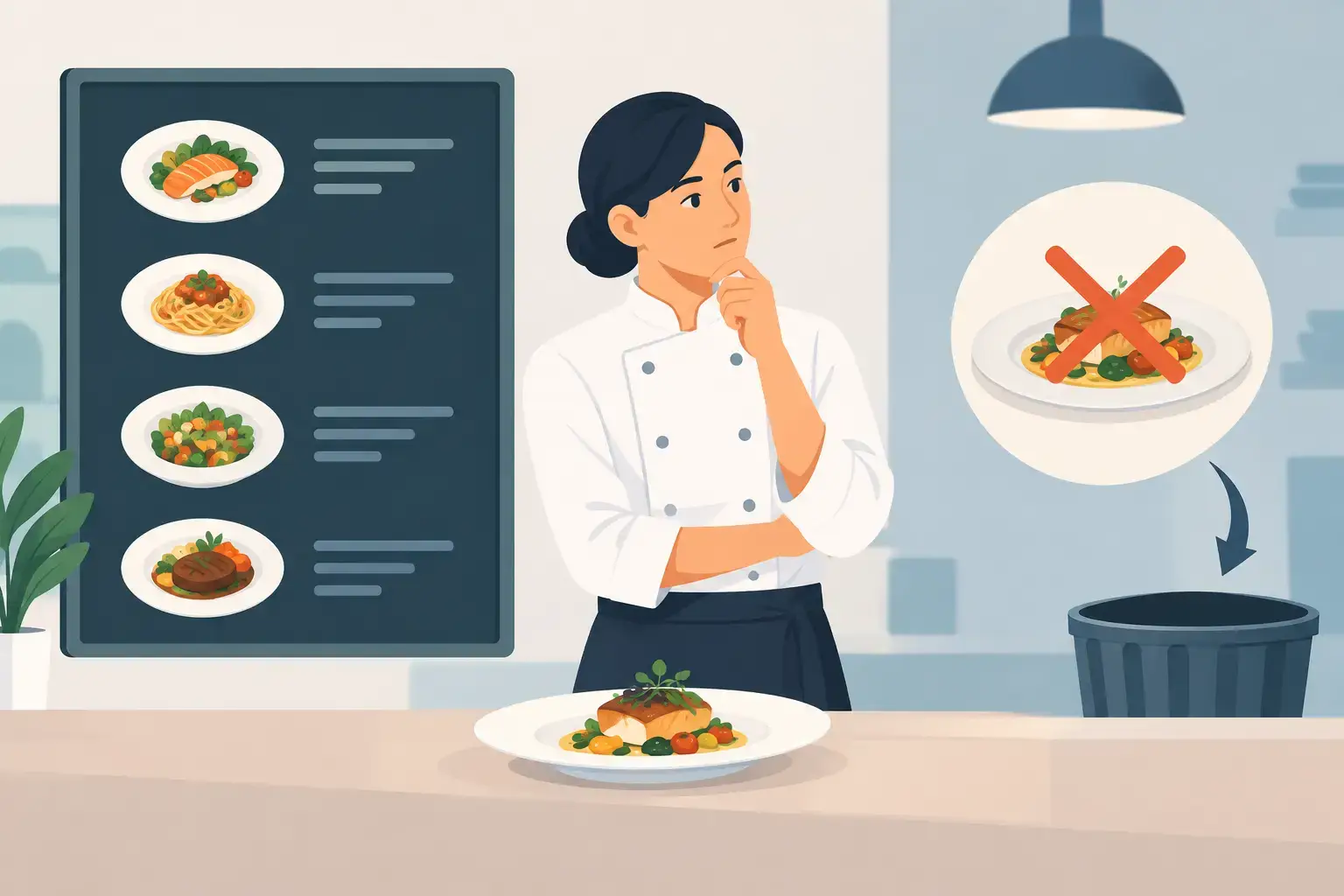
A dish can be loved by the chef, familiar to the team, and still be costing the business money. That is the hard part of knowing when it is time to drop a dish. The decision is rarely about whether a plate looks good. It is about whether it earns its space on the menu, on the prep list, in the walk-in, and during a busy service.
Menus accumulate history. A signature dish stays because it once sold well. A garnish remains because nobody has revisited the recipe. A low-volume entrée survives because one regular orders it every few weeks. Meanwhile, its ingredients create another supplier line, another prep task, another chance for waste, and another place for margin to disappear.
Dropping a dish is not failure. It is menu maintenance. Done properly, it makes the remaining menu easier to execute and more profitable to run.
Knowing When It Is Time to Drop a Dish
Start with the numbers, but do not stop there. A dish should be reviewed through four operational lenses: contribution margin, sales volume, execution, and ingredient impact. Looking at only food-cost percentage can lead to bad decisions. A dish with a higher food-cost percentage may still contribute strong gross profit in dollars. Conversely, a seemingly cheap plate can be a poor use of labor, prep capacity, and menu space.
The useful question is not, "Is this dish expensive?" It is, "What does this dish contribute after it takes its share of product, labor, prep, waste, and attention?"
It sells too little to justify its footprint
Low sales volume is the most obvious warning sign, but the threshold depends on the operation. A 40-seat neighborhood restaurant can carry a slow-selling seasonal special if it uses existing prep and gives regulars a reason to return. A high-volume café or multi-unit group has less room for dishes that interrupt production.
Look at a meaningful period, not one quiet week. Four to eight weeks is often enough for a stable menu, while seasonal businesses may need to compare the same period year over year. Then ask whether sales are low because the dish lacks demand or because it lacks visibility. Is it buried on the menu? Is the team recommending it? Is the price wrong? Has its photo or description gone stale?
If the dish has been properly presented and still cannot earn consistent orders, it is occupying real estate that a stronger item could use.
The margin looks acceptable only on paper
Recipe costing needs to reflect what the kitchen actually buys and uses. If supplier prices have moved, yields are wrong, portions are drifting, or a recipe has been altered without being updated, the stated margin is fiction.
Cost the recipe to the cent, including oils, sauces, garnishes, disposables where relevant, and realistic trim loss. Then compare the current plate cost with the menu price and target food cost. More importantly, calculate the gross profit dollars per sale. A $12 dish at 25% food cost produces less gross profit than a $28 dish at 35% food cost, even though the second percentage looks worse.
This is where honest costing changes the conversation. A dish may not need to be dropped because its food-cost percentage is high. It may need a portion adjustment, a price increase, or a different garnish. But if the gross profit is weak and guests are not ordering it, there is little case for keeping it.
One dish creates disproportionate waste
A menu item can be profitable at full sales and still lose money in the walk-in. The issue is often a single-use ingredient: a specialty herb, niche cheese, unusual cut, or house-made component with a short shelf life. If that ingredient is bought for one low-selling dish, the real cost is bigger than the line item on the recipe.
Track waste by ingredient and link it back to the dishes that require it. If kale is used across breakfast, lunch, and catering, it may be easy to manage. If microgreens exist solely for six orders of one appetizer a week, that is a different operational decision.
Before cutting the dish, see whether its ingredients can be cross-utilized in a better seller. If not, calculate the purchase minimum, expected usage, shelf life, and waste. Par levels are not guesswork. They should reflect forecast demand, existing stock, and what the kitchen can realistically sell before product deteriorates.
The dish slows down service or adds fragile prep
Some dishes are profitable but operationally expensive. They need a separate pickup method, a last-minute sauce, a fryer reset, a precise assembly, or one team member who knows how to execute them properly. On a quiet Tuesday, that may be manageable. At Saturday dinner pace, it can derail the pass.
Ask cooks where the friction is. A dish that comes back rarely but causes constant hesitation on the line is sending useful feedback. So is a plate that needs an unusually long explanation during training or cannot be prepped cleanly across shifts.
This does not mean every menu should be stripped to the simplest possible food. Complexity can be worth it when it supports the concept, commands a premium, and gives guests a reason to choose your venue. The point is to make the trade-off visible. If the dish complicates prep and service, its margin and demand need to pay for that complexity.
Quality is inconsistent across shifts
A dish that only works when the executive chef is on the pass is not a finished system. Inconsistent portioning, plating, doneness, or hold time creates guest complaints and comps that often never appear in menu profitability reports.
Review the recipe as a working instruction, not a concept note. Are yields specified? Are portions measured? Does the prep method match the equipment and skill level available on every shift? Can the plate be executed during a full rail without shortcuts?
Sometimes the right answer is to simplify the dish rather than remove it. Standardize a component, reduce the garnish count, change the vessel, or move a labor-heavy element into batch prep. If those fixes still do not produce consistency, dropping the dish protects the whole menu.
Use Menu Engineering Before You Cut
The worst way to remove a dish is to rely on instinct alone. The best way is to put sales mix and contribution margin beside each other. That separates dishes into four practical groups: high-selling, high-margin items to protect; high-selling, low-margin items to repair; low-selling, high-margin items to reposition; and low-selling, low-margin items to remove or rebuild.
A low-selling, high-margin dish may have a naming, placement, or staff-selling problem. Test a better description, move it on the menu, or give the front of house a clear recommendation cue. A high-selling, low-margin dish may be a guest favorite worth keeping, but it needs a cost correction before the next invoice makes the decision for you.
The clearest removal candidate is the low-selling, low-margin dish that also creates separate purchasing, extra prep, or waste. That is not a hidden gem. It is an operational leak.
With a connected recipe and menu system such as Plate Margin, a supplier price update can flow into current plate costs, menu analysis, prep requirements, and ordering decisions. That matters because a dish should be judged on current facts, not last season's spreadsheet.
Remove It Cleanly, Not Quietly
Once the decision is made, remove the dish from every connected workflow. Take it off the menu, but also stop it appearing in prep lists, ordering expectations, recipe books, allergen references, and training materials. Otherwise, the team keeps preparing components for an item that no longer earns revenue.
Use up viable stock with intent. A sauce might become a feature, a garnish may move to another dish, and a protein can be run as a limited special. Do not force a weak menu item to stay for weeks simply because there is inventory left. That usually turns a controlled change into more waste.
Tell the team why the item is leaving. "It did not sell" is less useful than, "It averaged three sales a week, required a separate order, and created $90 of weekly waste." Clear reasoning builds better habits. Chefs and managers begin to see that menu decisions are not personal judgments. They are operating decisions.
Keep a Short Review Rhythm
A menu does not need a full redesign every month, but it does need regular review. Check plate costs when supplier invoices change. Review sales and contribution margin on a set schedule. Revisit dishes after menu changes, new competition, price increases, seasonal shifts, or consistent service friction.
The goal is not to chase every fluctuation. It is to catch patterns while there is still room to act. A dish that has slipped for two months is easier to fix or remove than one that has quietly drained margin for a year.
A tighter menu gives the kitchen more than better numbers. It gives the team clearer prep, cleaner ordering, less dead stock, and more confidence at service. Keep the dishes that earn their place, then let the rest go before they start costing more than they contribute.