How to Track Restaurant Food Waste Accurately
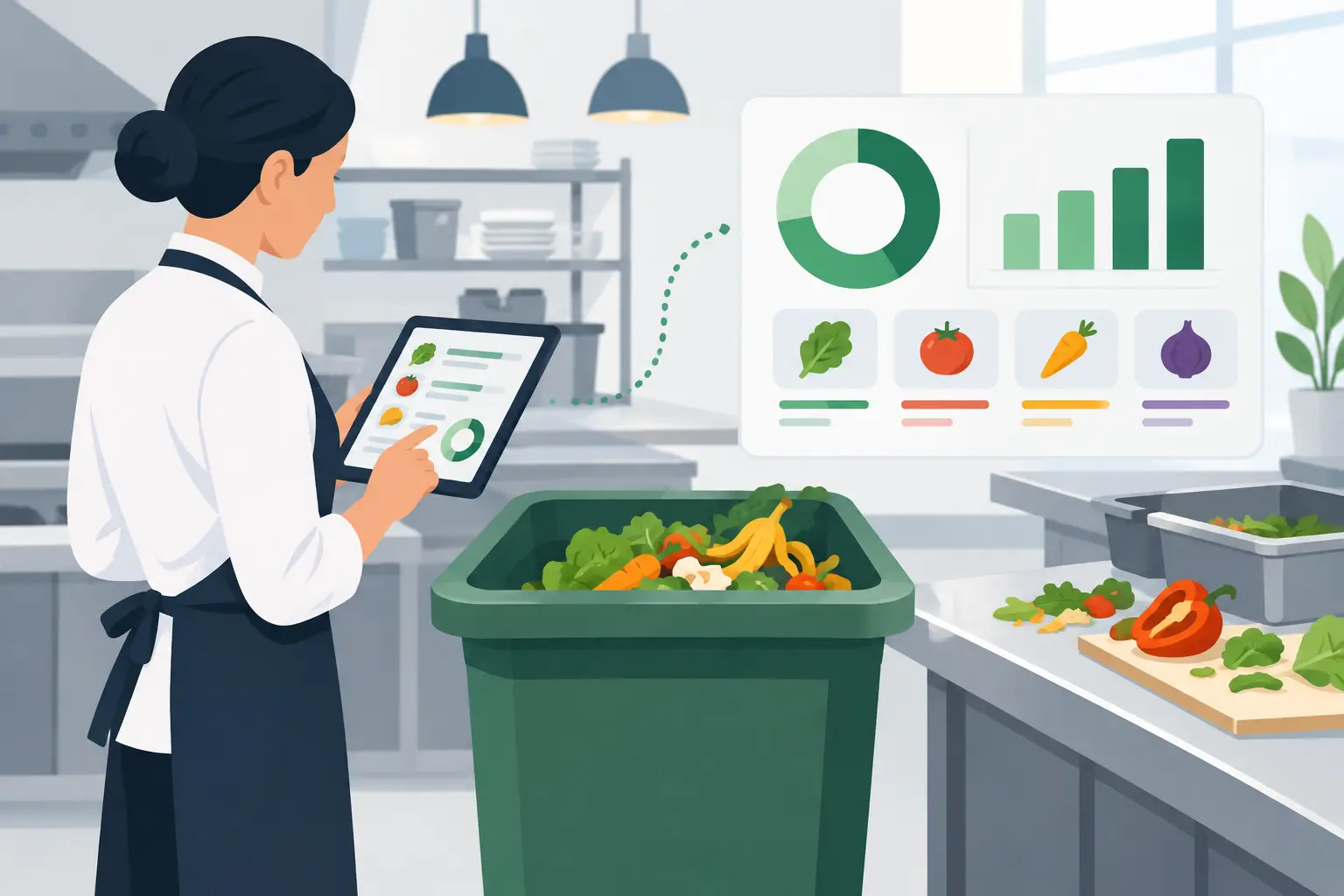
A trash can full of wilted herbs, overcooked proteins, returned plates, and expired dairy is not just a kitchen problem. It is paid-for inventory leaving the building with no sale attached. Learning how to track restaurant food waste turns that vague frustration into a number you can act on - before the invoice does.
The goal is not to make cooks document every parsley stem. The goal is to capture meaningful loss consistently, assign it a real value, and identify the operational decision behind it. When waste tracking is done well, it improves prep, purchasing, recipe execution, and margin at the same time.
Start with a waste log people will actually use
A waste program fails when it creates paperwork nobody can complete during service. Put the log where the waste happens: near prep, the walk-in exit, dish, or the waste bin. A clipboard works. A tablet works. Kitchen software works. What matters first is that recording waste takes seconds, not ten minutes.
Each entry needs five pieces of information: the item, quantity, unit, reason, and who logged it. Add the station or shift if your operation is large enough for that detail to matter. "Three pounds chicken thighs, overproduction, prep" is useful. "Food waste" is not.
Use the same ingredient names and units your team uses for ordering and recipes. If chicken is purchased by the case but portioned by the pound, make sure the waste log can convert that loss into a cost. Otherwise, the log will show volume without showing the money.
Do not wait for perfect systems to begin. Start with your ten highest-cost or highest-volume ingredients for two weeks. That early record will show where a full tracking process needs to focus.
Separate waste by cause, not just by item
An accurate waste total tells you how much money is being lost. A reason code tells you why. Those are different jobs, and both matter.
Keep the categories tight enough that the team can choose quickly and management can act. Most restaurants can work with these six:
- Spoilage or expiry
- Prep overproduction
- Trim and production loss
- Cooking or handling error
- Incorrect order, return, or plate waste
- Receiving damage or supplier issue
Some loss is planned. A whole fish has a known yield. A brisket is trimmed. Vegetable peelings may be unavoidable depending on the dish. Record planned production loss separately from preventable waste. If they are combined, a chef can appear to be wasting product when they are simply producing a recipe to spec.
The same discipline applies to plate returns. A returned steak might be a cooking error, an unclear modifier, slow service, or a guest who ordered more than they wanted. Do not label all returns as "customer waste" and move on. The cause determines the fix.
Value every entry at the cost you actually paid
Counting waste by pounds alone can send you toward the wrong priority. Throwing away five pounds of onions and throwing away five pounds of ribeye are not the same margin problem.
Every waste entry should be valued using the current unit cost in your inventory or recipe data. If one pound of salmon costs $9.40 and two pounds are discarded, that entry is $18.80 in food cost. If a batch of sauce is lost, value it from its recipe cost, including the ingredients that went into it.
This is where accurate recipe costing earns its place. A batch is not free because it was made in-house. It contains purchased ingredients, and its loss affects the dish cost just as surely as a spoiled case does. Costing to the cent makes waste reports credible enough to change behavior.
For items with variable yields, use the usable cost, not only the invoice cost. A $4-per-pound untrimmed cut may cost much more per usable pound after trim. Tracking loss against a realistic yield prevents the kitchen from underestimating expensive production waste.
Make logging part of the shift, not an end-of-month exercise
Waste data gathered from memory at the end of a week is usually fiction. The chef remembers the dramatic accident and misses the daily overprepped garnish, the half-pan of staff meal leftovers, and the repeated refires on one station.
Build waste logging into existing kitchen moments. Prep cooks record discarded batches when they happen. Line cooks log refires or incorrect fires as they are replaced. Closing staff record expired and spoiled product while rotating the walk-in. The manager reviews the log at close, when the details are still clear.
Accountability should be visible but fair. The purpose is to correct systems, not create a blame board. If several cooks waste the same component, inspect the recipe method, container size, equipment, training, or par level. If one issue repeats on one shift, then coaching may be needed. The data should help you distinguish between a people problem and a process problem.
Compare waste against sales, purchases, and production
A weekly waste dollar total is a starting point, not a diagnosis. A $500 waste week may be alarming in a small cafe and normal-looking but still costly in a high-volume restaurant. Put the number in context.
Track waste as a percentage of food purchases and, where possible, food sales. The calculation is straightforward:
Waste percentage of purchases = waste cost / food purchases x 100
Review it alongside sales volume, covers, events, weather disruptions, and menu changes. If waste rises after a quiet week, you may have prepped to old par levels. If spoilage rises after a large delivery, your ordering quantities or storage rotation may be off. If cooking errors increase on Friday nights, the line may be underprepared for volume or a new cook may need support.
For catering and event kitchens, compare waste against the guaranteed guest count and actual attendance. A ten-person shortfall on a plated event creates a different kind of overproduction than a daily restaurant prep miss. Your system should allow you to see that distinction rather than treating every excess pan as the same failure.
Turn the report into a weekly kitchen decision
Do not bury waste reports in a monthly management packet. Review the top waste items once a week with the chef, manager, and whoever controls ordering. Keep the conversation practical: What was lost? What caused it? What changes before the next order or prep shift?
A useful review might show that avocado waste is rising because weekend brunch forecasts are based on last season's sales. Adjust the prep quantity and ordering par. Or it may show that a sauce is frequently discarded because the recipe batch makes twelve quarts when weekday demand needs six. Scale the recipe, then update prep lists so the new yield is what the team sees.
This is why disconnected spreadsheets create trouble. A waste entry that lives separately from recipes, prep, purchasing, and menu analysis becomes a report, not a control. In Plate Margin, recipe and ingredient data can support waste accountability alongside live costs, ordering, and prep planning, so a change made to fix one problem carries into the next workflow.
Watch for the patterns that hide in plain sight
The most expensive waste is not always a spectacular dropped tray. It is often a small repeat loss that nobody owns. Look for ingredients repeatedly expiring just before delivery day, garnishes prepared in excess, sauces made in oversized batches, and menu items that require one-off components with low sales.
Also watch for excess stock. Waste is the final symptom of buying too much, storing poorly, or failing to use what is already on hand. If the walk-in is full but the order is placed from habit, the kitchen is creating future waste before prep begins. Par levels are not guesswork. They should reflect current sales, bookings, lead times, usable stock, and realistic shelf life.
Menu engineering belongs in the conversation too. A low-selling item with costly, perishable ingredients may look harmless until its supporting inventory starts expiring. The answer may be better cross-utilization, a smaller prep batch, a limited availability note, or removing the dish. It depends on the dish's contribution margin and its role on the menu, not just its sales rank.
Set a target, then improve one cause at a time
Do not announce that waste must drop by 50 percent without separating unavoidable yield loss from preventable loss. Establish a baseline over four to six weeks, then set a target for the categories you can control. A kitchen with no reliable records should focus first on consistent logging, not a perfect percentage.
Choose one or two corrective actions each week. Change a prep par. Reduce a batch size. Retraining a station on portioning may be the right call. Tighten receiving checks if damaged produce is arriving. Small changes are easier to verify, and the next week's log tells you whether they worked.
Food waste tracking is not about documenting failure. It is a daily control that tells you whether the kitchen is buying, prepping, cooking, and selling with intent. When the numbers are current and the response is specific, less product reaches the bin and more of every food dollar stays on the plate.