How Modern Kitchen Software Helps Restaurants Compete
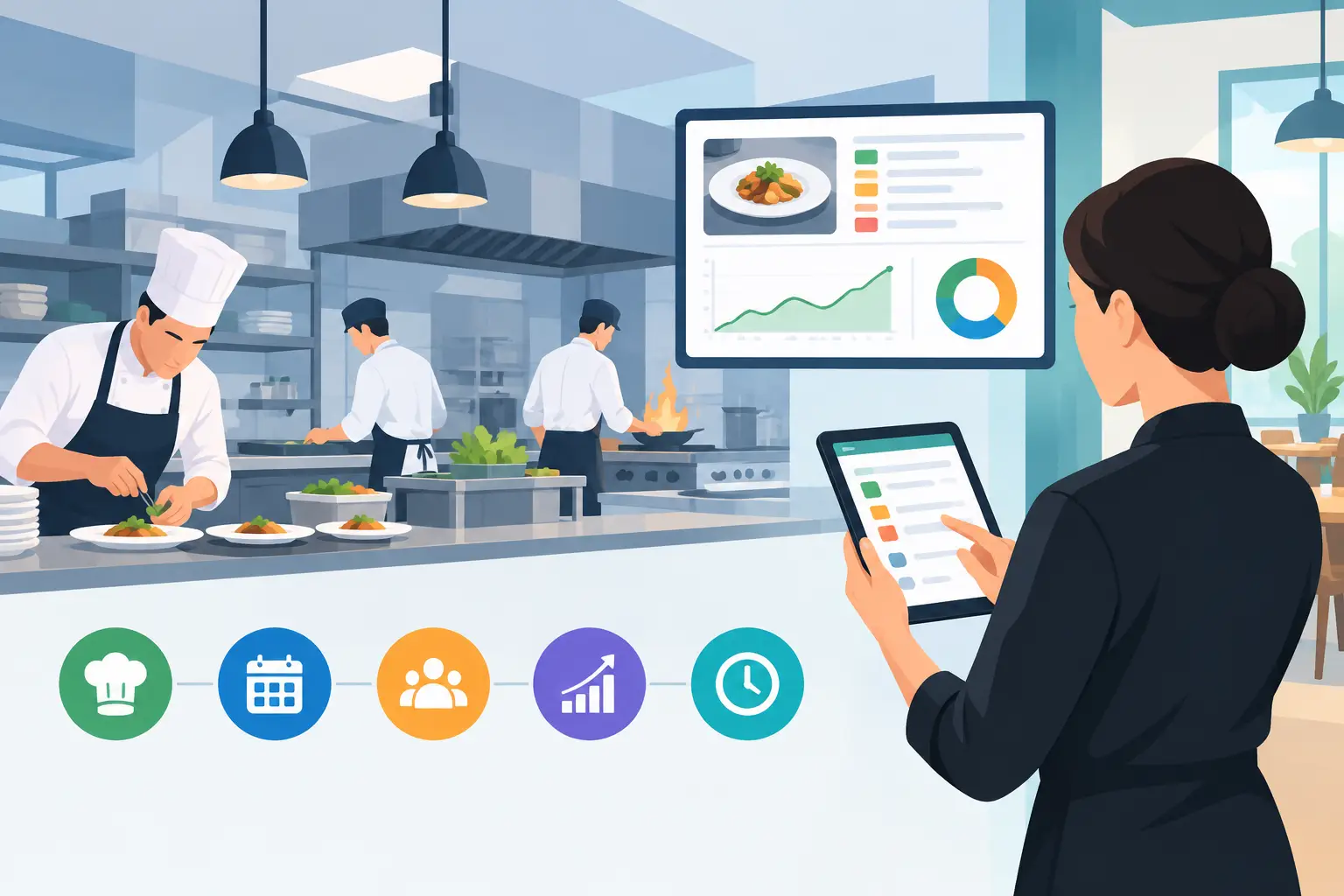
A chicken breast that cost $2.10 last month now costs $2.68. The menu price is unchanged, the recipe card is sitting in a shared folder, and Friday’s prep was based on a rough guess from last week. Nothing looks dramatically wrong from the pass, but margin is leaking from three directions at once. That is how modern kitchen software helps restaurants compete: it turns the kitchen’s everyday decisions into connected, current controls instead of a trail of spreadsheets, paper lists, and memory.
Restaurants do not lose ground only because food prices rise or labor gets tight. They lose ground when the team finds out too late. An invoice arrives after a busy weekend. A menu item sells well but earns less than expected. Prep runs long because pars were set without accounting for reservations, catering, or a weather-driven change in covers. The kitchen works hard, yet the numbers stay unclear.
Good software does not replace a chef’s judgment. It gives that judgment reliable inputs, before the invoice does.
Modern kitchen software starts with one version of the recipe
The strongest operational systems begin with a simple discipline: every recipe has one accurate home. That recipe should include yields, units, portions, allergens, methods, and the ingredients actually used in the kitchen. It should not exist in one costing spreadsheet, another prep document, and a third version printed beside the line.
When recipe data is entered once and used everywhere, a change has a clear consequence. Update the price of cooking oil, and every dish using that oil shows its new plate cost. Change a garnish, and the allergen matrix, recipe book, food-cost percentage, and ordering needs can all reflect the revision. Add a new venue or scale a recipe for an event, and the team is working from the same method rather than rebuilding calculations by hand.
That is not a minor administrative improvement. It is the difference between controlling margin and reviewing it after it has gone. A recipe that costs to the cent gives chefs and owners a real starting point for decisions about portions, substitutes, pricing, and purchasing.
There is a trade-off: the system is only as trustworthy as the initial recipe and supplier data. A rushed setup with vague units such as “one bag” or “some herbs” produces vague answers. But once a kitchen commits to clean recipe entries, maintaining them is far easier than repeatedly repairing disconnected files.
Live plate costs make menu decisions less sentimental
Every restaurant has a dish that the team loves, guests order, and the kitchen quietly suspects is too expensive. Without current costing, that suspicion can last for months. The dish may be popular enough to hide the problem while it absorbs profit from the rest of the menu.
Modern kitchen software makes each item visible as a commercial decision. Operators can see plate cost, food-cost percentage, selling price, and contribution to gross profit without manually matching recipes to old invoices. When an ingredient price changes, the impact appears across the menu rather than in one forgotten cell.
This gives menu engineering a practical purpose. High-volume, high-margin dishes deserve protection and placement. Low-selling, low-margin dishes need a decision: reprice, rework, reposition, or remove. Some items are strategically worth keeping, perhaps because they establish a restaurant’s identity or satisfy a key dietary need. The point is not to cut everything that is difficult to cost. It is to know exactly what each decision costs.
A $1 increase on a dish may be appropriate in one market and a bad move in another. Software cannot decide a guest’s price sensitivity. It can show whether keeping the price flat requires a smaller portion, a different supplier, a revised garnish, or acceptance of lower margin. That is the conversation operators need to have with facts on the table.
Forecasting changes prep from habit to a plan
Prep is where optimism gets expensive. A kitchen that preps for its busiest possible day creates excess stock, tired produce, and avoidable waste. A kitchen that preps too cautiously risks 86s, rushed batches, and inconsistent service. Par levels are not guesswork, but they cannot be static either.
The useful forecast is built from the way the business actually trades. Expected bookings, historical sales, day of week, venue, menus, and service size all matter. A 70-cover Tuesday with no event should not generate the same prep demand as a 70-cover Saturday with a private party and a large preordered group.
When forecasts connect to recipes and menu sales, prep lists can build themselves from expected demand. The chef still adjusts for local knowledge - a festival nearby, bad weather, a promotion, or a group that always orders steaks. But the starting number is calculated, not invented at 9:30 a.m. while receiving a delivery.
This also makes delegation cleaner. A prep list should say what needs to be made, how much is needed, and which recipe version applies. The team spends less time translating a manager’s shorthand and more time producing consistent mise en place.
Ordering should follow demand and stock, not panic
The ordering process is often where fragmented kitchen data becomes most obvious. A chef checks the walk-in, scrolls through a supplier portal, looks at a prep sheet, and tries to remember what is arriving tomorrow. It works until it does not. One missed line item can mean an emergency purchase, a substitution that changes a dish, or a lost sale.
Connected kitchen software brings recipe demand, stock on hand, supplier pack sizes, and upcoming service into the same workflow. Instead of writing an order from scratch, the kitchen can see what is required to cover the forecast, what is already available, and what needs to be purchased. Supplier-aware ordering lists also reduce the small but repeated mistakes caused by ordering the wrong pack size or overlooking a product split across vendors.
It still depends on disciplined receiving and stock checks. If inventory is not updated, no tool can know that three cases were damaged or that someone borrowed product from another outlet. But a connected order list gives the team a standard process and makes exceptions visible. That is better than relying on whoever happened to work the last close.
For multi-venue operators, the gain is larger. Standard recipes can stay consistent while purchasing reflects each site’s suppliers, sales pattern, and stock position. Group leadership gets a clearer view without forcing every chef into a corporate process built for someone else’s kitchen.
Accountability protects the margin after the order arrives
Food cost is not only a purchasing number. Waste, overproduction, poor storage, missing transfers, and equipment failures all show up in the margin eventually. The problem with informal tracking is that it turns recurring loss into background noise.
A kitchen needs an easy way to record waste while the cause is still useful. Was the batch over-prepped? Was the product delivered short-dated? Did a fridge run warm overnight? Was a dish sent back repeatedly? Patterns matter more than blame. A waste log that nobody uses is theater; a quick, shared record can expose a purchasing, prep, or training problem early.
The same principle applies to excess stock and equipment maintenance. If the combi oven needs attention, the team should not depend on a verbal handoff that disappears during a busy service. If one location keeps carrying too much of a slow-moving item, that should be visible before it becomes expired inventory. Modern kitchen software creates a place for operational facts that would otherwise live in text messages, notebooks, and one person’s head.
The advantage is speed with control
Restaurants compete on more than the food. They compete on whether they can hold quality when costs move, whether they can prepare the right amount for a busy service, and whether the team can act on the same information without adding another meeting.
Plate Margin is built around that connected workflow: one recipe entry can feed live costing, menu analysis, forecast-led prep, supplier-aware ordering, and daily controls. The point is not more software for its own sake. It is fewer gaps between the decision made at the desk and the work happening in the kitchen.
Start with the recipes that drive the most sales or create the most anxiety. Cost them accurately, connect them to current ingredients, and use the result to set tomorrow’s prep and order. Control rarely arrives as one dramatic fix. It is built service by service, when the kitchen can see the number and act before it becomes a problem.