Comparing Supplier Prices to Cut Food Spend
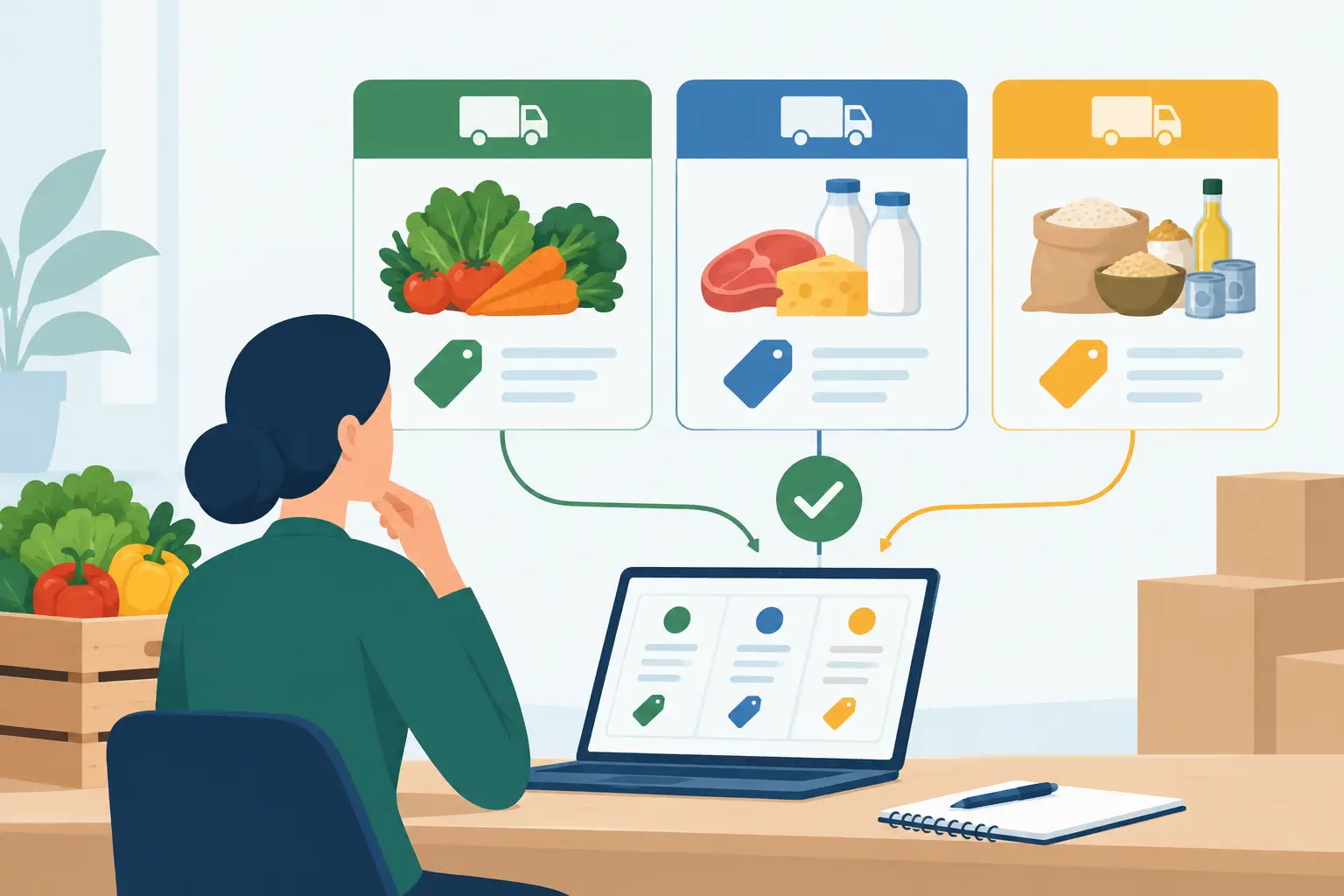
A case of tomatoes can look cheaper on one supplier list and cost you more by Friday. The difference is usually hiding in pack size, yield, trim, substitution, delivery minimums, or a price that has not been updated since last month. Comparing supplier prices to cut food spend is not about chasing the lowest number on a sales sheet. It is about knowing what each usable unit really costs your kitchen before the invoice does.
For working chefs and operators, that distinction matters. A lower case price does nothing for margin if it creates excess stock, forces an ingredient change, or leaves a recipe costed on last season's number. Good purchasing control starts with clean information and ends with a buying decision that holds up on the line.
Compare supplier prices in the units you actually use
Suppliers sell cases, bags, pails, tubs, pounds, gallons, and assorted pack formats. Recipes do not. A recipe may call for eight ounces of cleaned chicken, 120 grams of diced onion, or two fluid ounces of oil. If you compare only the case price, you are comparing labels, not costs.
Convert every supplier item to a common usable unit before deciding who is cheaper. For produce, account for trim and yield. For proteins, account for bones, skin, fat, cooking loss, and portion size where relevant. For dry goods, confirm net weight rather than relying on the number of bags in a case. The question is simple: what does one usable pound, ounce, or portion cost after your kitchen has done its work?
A 40-pound case of onions at $22 is not automatically cheaper than a 25-pound case at $15. Once peel and trim are factored in, the cost per usable pound may be close. If the larger case also sits too long and spoils, it is not the value buy. Costing to the cent means using the unit your recipe needs, not the one printed largest on the invoice.
Watch for false equivalencies
Comparable products are not always identical products. One vendor's feta may be pre-crumbled in brine while another's is a solid block. One chicken breast may be 6-ounce trimmed portions, while another arrives as an untrimmed bulk pack. A canned tomato labeled "whole peeled" can vary dramatically in juice, solids, and quality.
That does not mean you should only buy one specification. It means the specification needs to be visible when you compare. Record the brand, pack size, purchase unit, yield, and any operational difference that affects prep or plate quality. A lower cost is useful only when the product can do the same job.
Comparing supplier prices to cut food spend without cutting standards
The fastest way to create a bad purchasing system is to reward buyers solely for finding the lowest price. That approach can drive inconsistent quality, surprise prep labor, unavailable items, and menu drift. The kitchen then pays the difference in a less obvious place.
Set a clear approved specification for high-impact ingredients: proteins, dairy, cooking oils, key produce, beverages, and any product that defines a signature dish. Then compare approved alternatives against that standard. If a substitution changes taste, portioning, allergen exposure, or prep time, treat it as a menu decision, not a purchasing shortcut.
There are times when a more expensive supplier is the correct choice. A distributor with reliable early delivery, consistent quality, and fewer short shipments may protect service better than a slightly cheaper option that creates daily workarounds. For a catering kitchen, dependable availability before a large event can be worth more than a small price difference. For a high-volume restaurant, the better value may be the pack that reduces portioning time and waste.
The discipline is not "buy cheap." It is "know why you are paying more, and make sure the menu can carry it."
Build a price file that survives a busy week
Supplier comparisons fail when they live in a one-off spreadsheet that only one person understands. Prices change, cases change, vendors discontinue items, and somebody starts ordering from memory. By the time recipe costs are reviewed, the menu may already be quietly losing margin.
Your price file should hold the purchasing facts your team needs: supplier, item description, brand or specification, pack format, invoice price, usable unit cost, last price date, and approved substitute where one exists. Keep it current enough to make decisions. Not every ingredient needs a daily update, but volatile categories do.
Produce, seafood, dairy, eggs, oils, and specialty imports deserve frequent attention because price swings can be material. Review staple dry goods and stable packaged products on a regular schedule or whenever an invoice flags a change. The goal is not administrative perfection. The goal is to stop running a menu on fiction.
When a price changes, update the ingredient once and let that cost flow through every connected recipe, menu item, order list, and profitability view. That is the advantage of working from a single source of truth instead of duplicating numbers across recipe cards and spreadsheets. Plate Margin is built around that kitchen logic: change an ingredient cost, and the connected operational numbers have a reason to change with it.
Use invoices as the trigger, not an end-of-month surprise
The invoice is where actual purchasing costs show up. Train the person receiving deliveries to flag price changes, substitutions, shorted items, and pack-size changes immediately. A product that arrives in a different format can distort both inventory and recipe costing, even if the line-item total looks normal.
A five-minute check at receiving is cheaper than a month of inaccurate food-cost reports. It also gives the buyer a chance to challenge an unexpected increase, correct an invoice error, or move the next order to an approved alternative while there is still time.
Compare the whole order, not just individual items
An item-by-item comparison is necessary, but it is not the final answer. Delivery fees, fuel charges, minimum-order thresholds, rebates, payment terms, and split deliveries can change the real cost of buying from a supplier. So can the labor required to receive, store, and break down an order.
Avoid false savings created by fragmented purchasing. Ordering a few low-priced products from a second vendor may not be worthwhile if it adds a delivery day, pushes your primary supplier below a minimum, or creates more storage pressure. On the other hand, a second supplier can be sensible for a volatile category, a specialty product, or a critical backup source.
Look at supplier decisions over a week or a menu cycle. Compare the landed cost of the basket, the reliability of service, and the operational impact on the kitchen. That gives you a buying decision you can defend, rather than a collection of cheap-looking line items.
Tie purchase prices back to menu decisions
Price comparison becomes powerful when it reaches the menu. If salmon rises by $1.20 per pound, what happens to the plate cost of the salmon entrée? Does the food-cost percentage still work at the current selling price? Is the portion still right? Could a garnish or side be adjusted without weakening the dish? Those are commercial questions, and they should be answered before the margin disappears.
Do not make broad menu changes for every small fluctuation. Build tolerance into your pricing and review cadence. But when a key ingredient moves enough to affect contribution margin, act deliberately. Reprice, re-portion, negotiate, change the specification, run the dish as a limited special, or pause it. Leaving it alone is still a decision, just usually an expensive one.
For multi-venue operators, standardize this process across locations. The same recipe cannot have three different assumed costs because each kitchen is maintaining its own version of a supplier list. Local purchasing differences may be necessary, but the central recipe and specification should remain clear. That is how you see whether a venue has a buying issue, a waste issue, or a menu issue.
Keep the order tied to demand
Even the best supplier price is wasted if you buy too much. Purchase decisions need demand signals: bookings, sales history, upcoming events, weather, menu mix, current stock, and realistic shelf life. Par levels are not guesswork. They should move when covers move.
Start with what you need to produce, then work backward through recipes to ingredients and supplier packs. That keeps ordering tied to actual service requirements rather than habit. It also exposes awkward pack sizes before they become excess stock in the walk-in.
A cheaper 10-pound pack is not cheaper if you need four pounds before its quality drops. The right comparison includes the amount you will use, not just the amount you can purchase.
The kitchen does not need more price sheets. It needs a repeatable habit: compare like for like, cost usable units, update from invoices, and let changed costs challenge the menu while there is still time to respond. That is how purchasing becomes margin control instead of paperwork.