Building Clean Digital Recipe Books for Staff
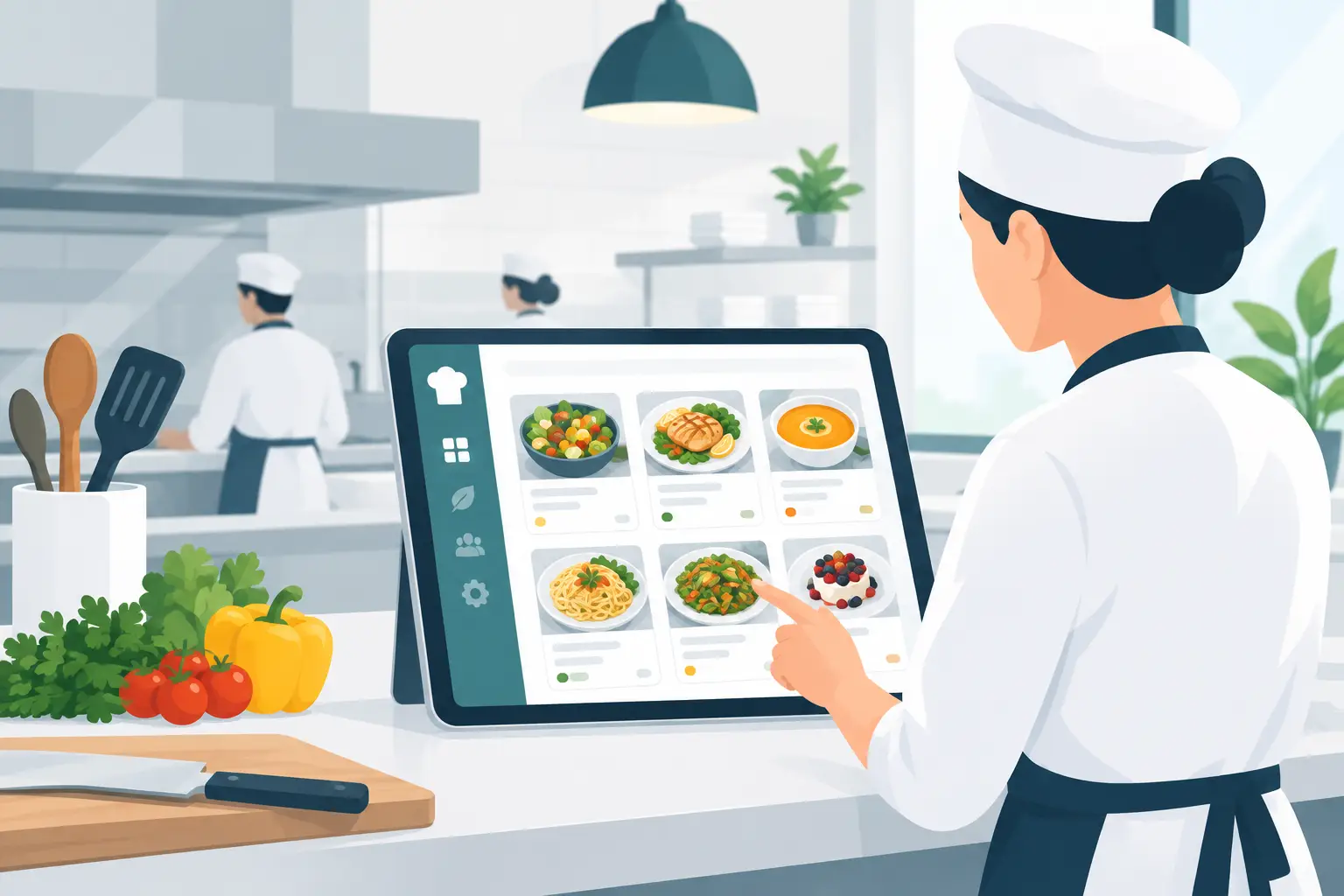
A recipe book should answer the question at the station, not send a cook hunting through a binder, a group chat, and three old spreadsheets. Building clean digital recipe books for staff means giving the kitchen one current version of every dish: what goes in it, how it is made, what it yields, how it is plated, and what it costs.
That standard matters when the chef is off, a new cook starts, or Saturday service gets busy. If a recipe only lives in one person's head, it is not a system. It is a risk.
Start with the recipe data that actually runs service
A clean recipe book is not a pile of attractive recipe cards. It is a working kitchen document built around repeatable production. Every recipe needs a clear name, yield, portion size, ingredient quantities, method, and plating or service instruction. Those basics sound obvious, but gaps are where consistency and margin disappear.
Write quantities in the units your team uses on the bench. If prep weighs herbs in ounces and sauces in quarts, do not force vague directions such as "one bunch" or "one container." Use the purchase and recipe units deliberately, then make the conversion clear. A cook should be able to produce the recipe without guessing, and a manager should be able to cost it to the cent.
The method needs the same discipline. "Cook until done" is not a usable instruction for a team. Name the pan, temperature, time range, visual cue, holding method, and final yield where they affect the result. For a braise, specify whether the yield is strained weight or total pan weight. For a vinaigrette, state whether the batch is blended, whisked, or held in a labeled squeeze bottle. Small details prevent large variation.
Separate components from finished dishes
Most menu items are assemblies, not single recipes. A burger might include a patty, sauce, pickle, bun, garnish, and fries. A clean digital book stores each of those components once, then builds the finished dish from them.
This avoids the familiar problem of six recipes carrying six slightly different versions of the same aioli. Update the aioli once and every dish using it reflects the new method, yield, allergens, and cost. That is not administration for its own sake. It prevents cooks from producing competing versions of the same component and gives the chef a reliable view of what the menu really costs.
Build for the people using it, not the person writing it
Recipe books often fail because they are written as reference documents rather than service tools. The head chef may understand every shorthand note. A line cook on their second shift will not.
Use plain recipe names and make search easy. Call it "Charred Corn Salsa," not "Corn Garnish v4." Organize recipes by the way the kitchen works: prep components, sauces, desserts, menu dishes, banquet items, or station. A catering operation may organize by event menu and production day; a multi-venue group may need venue-specific menus alongside shared core recipes. The right structure depends on how staff pull information during a shift.
Keep the main recipe screen clean. Put the items needed to execute first: batch yield, ingredients, method, portion, and photo if it genuinely clarifies plating. Supporting detail such as allergen notes, holding life, equipment requirements, and cost should be available without burying the method under a wall of text.
Photos help when they set a standard. A plated dish photo, a labeled hotel pan, or the correct dice size can reduce ambiguity quickly. But a photo cannot replace a measurable instruction. "See photo" is not a method.
Connect recipes to live ingredient costs
A digital recipe book earns its place when it does more than replace paper. The operational value comes from connected data.
Every ingredient in a recipe should link to a current purchase item and supplier price. When the cost of chicken, oil, or dairy changes, the recipe cost should move with it. Otherwise, staff are working from one document while management makes margin decisions from another. That is how a dish stays on the menu at a profitable-looking 28% food cost while the actual number has quietly climbed past 35%.
This connection also exposes where a recipe needs attention. Sometimes the answer is a price increase. Sometimes it is a portion adjustment, a supplier change, or a substitution that protects the dish without lowering the standard. It depends on the role of the item, guest expectations, and the rest of the menu. The point is to see the change before the invoice does.
With Plate Margin, a recipe entered once feeds live plate costs, food-cost percentages, recipe books, menu analysis, prep, and ordering. Change a component or supplier price and the connected workflows update. That is costing, made honest: one source of truth instead of a costing sheet that went stale three menu changes ago.
Make scaling and prep instructions impossible to misread
A recipe book needs to work at the batch size the kitchen needs today, not just the batch size written during development. If a sauce recipe yields 20 portions but the forecast calls for 73, the team should not be doing rushed calculator math at 8 a.m.
Set a standard yield and standard portion for every recipe, then allow the batch to scale cleanly. Be careful with steps that do not scale in a straight line. A larger batch may need a different pot, longer cooling time, smaller batches in the blender, or extra labor. Put that operational reality in the instructions.
Prep directions should also state what "done" looks like. Include container size, label name, date rule, storage location, and shelf life when relevant. "Make mushroom duxelles" does not help the closing cook decide whether it is cooled safely, portioned correctly, or ready for tomorrow's service.
For high-volume or high-risk items, add a short quality check: seasoning target, finished weight, texture, color, or internal temperature. These are the controls that protect the guest experience when production moves between cooks and shifts.
Control access without creating a bottleneck
Not every team member needs permission to edit every recipe. In fact, open editing usually creates the same chaos as paper notes - just faster.
Give cooks access to view the current recipes and production instructions. Let trusted chefs or managers propose changes. Reserve final approval for the person accountable for culinary standards and cost. This keeps the book useful while protecting it from accidental edits, undocumented substitutions, and quiet portion drift.
A change log is worth having, especially across multiple venues. When a cook says the dressing tastes different, the team should be able to see whether the salt level changed, the oil was substituted, or the batch yield was corrected. Accountability is easier when the record is clear.
Review recipes when the kitchen changes
Recipe books do not stay clean by being written once. They stay clean because someone owns the review cycle. Review recipes when suppliers change pack sizes, menu prices move, ingredients become seasonal, equipment changes, or the team repeatedly asks the same question.
Use service feedback, waste records, and prep overages as evidence. If a component is regularly thrown away, the problem may be the forecast, the batch yield, the shelf life, or the menu mix. If a dish regularly runs out despite following the prep list, check the portion size and actual sales pattern before blaming the station.
Do not let temporary fixes become permanent undocumented practice. If the kitchen has been using a smaller ladle, a different garnish, or a new vendor product for two weeks, update the recipe or make a decision to return to standard. The recipe book should describe the operation you intend to run, not an old version of it.
The standard should hold when you are not there
The test of a digital recipe book is simple: can a capable cook produce the right food, in the right amount, at the right cost, without chasing a chef for answers? If not, the book needs work.
Keep the language direct. Keep the data current. Build recipes as connected operating instructions, not static documents. Then every station has a clearer standard, every prep shift starts with fewer assumptions, and your margin has less room to leak.