Scaling Recipes Accurately for Functions and Events
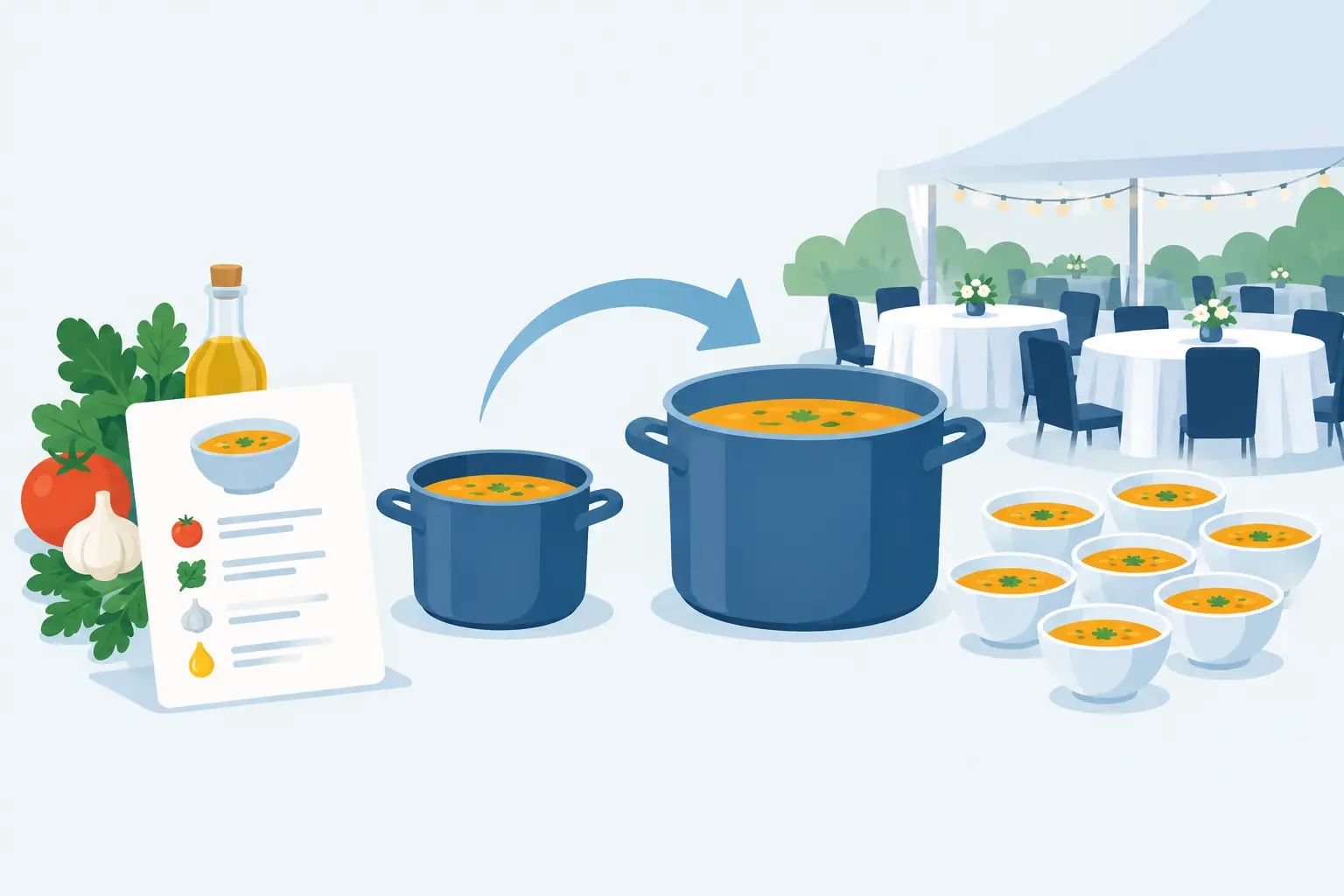
A 40-cover lunch can absorb a loose scoop of dressing or an extra tray of roasted vegetables. A 240-guest wedding cannot. When you are scaling recipes accurately for functions and events, every assumption gets multiplied alongside the food. A recipe that is unclear at 10 portions becomes expensive, inconsistent, and hard to execute at 200.
The answer is not more complicated spreadsheets. It is better recipe data, a realistic read on attendance, and one connected process from booking to order to prep list. Functions are won or lost well before the first plate leaves the pass.
Start With a Recipe That Has a Real Yield
You cannot scale a recipe accurately if its starting yield is a guess. “Serves 10” is not enough information when one cook treats that as 10 generous portions and another stretches it to 12. Build every production recipe around a defined output: finished weight, volume, count, or portion size.
For a braised beef dish, that might mean 5 ounces of cooked meat and 3 ounces of sauce per guest. For a buffet salad, it may mean 4 ounces per person, with a higher allowance if it is the main vegetarian offering. For canapés, it is a count per guest, not a vague pan size.
Record the usable yield, not just the raw input. A case of romaine does not become a case of plated salad. Trim, peel, cook loss, drainage, and breakage all change what reaches the guest. If your recipe says 20 pounds of raw potatoes produces 50 portions, confirm it during service and correct it if it does not. Costing to the cent starts with yields you have actually tested.
Standardize the units before you multiply
Mixed units cause quiet errors. A recipe with pounds of chicken, cups of stock, and “three bunches” of herbs may work for a chef who knows it by heart, but it is weak operational data. Convert ingredients to purchasing and production units your team can repeat.
Weight is usually the cleanest choice for batch production. Count works for items such as rolls, whole fruit, or individual desserts. Volume can work for liquids, but only if the recipe is consistently measured. The goal is simple: the person scaling the recipe should not need to interpret it.
Calculate the Event Quantity, Not Just the Guest Count
A booking for 150 guests is not automatically a production target of 150 portions. The correct number depends on the service style, menu structure, and event conditions.
A plated three-course dinner may need a small contingency, particularly when dietary meals, staff meals, or unexpected place settings are involved. A self-serve buffet needs a different calculation because guests can take more than one portion and early trays can disappear faster than the planned average. Passed appetizers depend on duration, bar sales, and whether a substantial meal follows.
Before scaling, establish four facts:
- Confirmed guest count and expected no-show risk
- Service format, timing, and menu sequence
- Dietary, allergen, and children’s meal requirements
- A realistic contingency quantity for that event
Do not apply one blanket overage percentage to every function. Five percent may be sensible for a tightly managed plated dinner. It may be inadequate for a long reception with a buffet, late additions, and a menu built around popular small plates. The right buffer protects service. An automatic oversized buffer creates waste that looks like caution on paper.
Separate guaranteed covers from production covers
Use the guarantee as the commercial baseline, then set production covers deliberately. If the event guarantees 120 but your service lead expects 125 settings including vendors and last-minute dietary replacements, scale the food for 125. Document why.
That distinction matters after the event as well. If you produced for 125 and served 118, you can review whether the contingency was justified. Without separate numbers, excess food is written off as “event waste” and nobody learns from it.
Use a Scaling Factor, Then Check the Weak Points
The basic math is straightforward:
Production covers ÷ recipe yield = scaling factor
If a recipe yields 24 portions and the event needs 120, the factor is five. Multiply each ingredient by five, then check whether every ingredient should scale in a straight line.
Most core ingredients do. Proteins, grains, sauces, and portioned components should be calculated precisely. But seasoning, acids, thickening agents, garnishes, and reduction-based sauces need a chef’s review. Salt does not always behave linearly in a larger batch. A sauce made in a wide rondeau reduces differently than the same sauce made in a stockpot. Fried herbs may need a production allowance for breakage, but not five times the original garnish quantity.
This is where recipe knowledge matters. Keep the calculated quantity as the starting point, then include practical batch instructions. For example: make the vinaigrette as a full batch, reserve 10 percent, taste after the greens are dressed, and adjust only at service. That gives the team control without handing them permission to improvise the entire recipe.
Scale in Batches When Equipment Sets the Limit
A recipe can be mathematically correct and still fail in production. Your combi oven, mixer, stockpots, blast chiller, refrigeration space, and sheet pans set real limits on what can be produced safely and consistently.
If the recipe is designed for 30 portions but the event requires 300, producing one tenfold batch may change texture, cook time, cooling speed, and labor flow. It is often better to define the production plan as five 60-portion batches or ten 30-portion batches. The ingredient total stays the same, but the prep becomes executable.
Batching also improves quality control. A cook can taste and adjust five manageable sauce batches. They cannot easily rescue a 20-gallon batch that is underseasoned, broken, or reduced too far. For event work, consistency is not only about the finished plate. It is about giving the team a repeatable path to get there.
Let the Recipe Drive Prep, Ordering, and Costing
A scaled recipe should not sit alone in a function sheet. Once the event quantity is set, it needs to drive the next decisions automatically: what must be prepped, what must be bought, what stock can be used, and what the event actually costs.
This is where disconnected systems create expensive blind spots. A chef changes a 100-person function to 140 guests, updates a prep spreadsheet, but does not adjust the order. Or purchasing orders the right quantity, but nobody sees that a supplier price increase has pushed the event food cost beyond the agreed margin.
With a connected recipe system such as Plate Margin, one recipe entry can scale service quantities, build prep lists, and feed supplier-aware ordering while keeping the plate cost current. When bookings move, the operational numbers move with them. That is the standard: changes should show up before the invoice does, not after the function has been served.
Check inventory before creating the order
The scaled ingredient list is the gross requirement. The purchase order should reflect the net requirement after usable stock is counted. That means accounting for what is already on hand, what is committed to regular service, what has a short shelf life, and what is realistically available after trim.
Do not treat all inventory as free inventory. Ten pounds of tomatoes in the walk-in may already belong to tomorrow’s lunch service. A half-open bag of specialty flour may be stale, mislabeled, or insufficient for a high-volume bake. Accurate ordering requires an honest stock position, not an optimistic one.
Protect Allergens and Dietary Meals During Scaling
Dietary production is often where function scaling becomes messy. A kitchen may correctly scale 150 standard meals but leave gluten-free, vegan, or allergen-safe meals as handwritten afterthoughts. That is a service risk, not a minor administrative gap.
Build those meals into the production count from the beginning. Identify whether the dietary dish replaces a component or requires a complete separate recipe. Confirm yields, packaging, garnish, labels, and holding instructions. If 12 guests need a dairy-free dessert, make the production target 12 plus an intentional contingency, not “however many are left.”
Allergen matrices should update from the recipe ingredients, but the team still needs an execution plan. Separate utensils, storage, pickup order, and clear tickets matter just as much as accurate data.
Reconcile After Every Event
The fastest way to improve function margins is to compare the plan with what happened. Review final guest count, production covers, purchases, leftovers, waste, substitutions, and actual portion performance. Keep it factual.
If 180 guests consistently consume less of a side dish than the recipe allowance predicts, reduce the next event’s target. If a plated entrée runs short whenever the kitchen trims whole fish, revise the yield. If a garnish is regularly unavailable at the final hour, change the ordering lead time or specify an approved substitute.
Functions reward disciplined repetition. Every event gives you better numbers for the next one, provided the recipe, prep, purchasing, and waste records live in the same operational picture. Build that habit, and your team will spend less time chasing quantities and more time putting out food they are proud to serve.