Restaurant Excess Inventory Management That Works
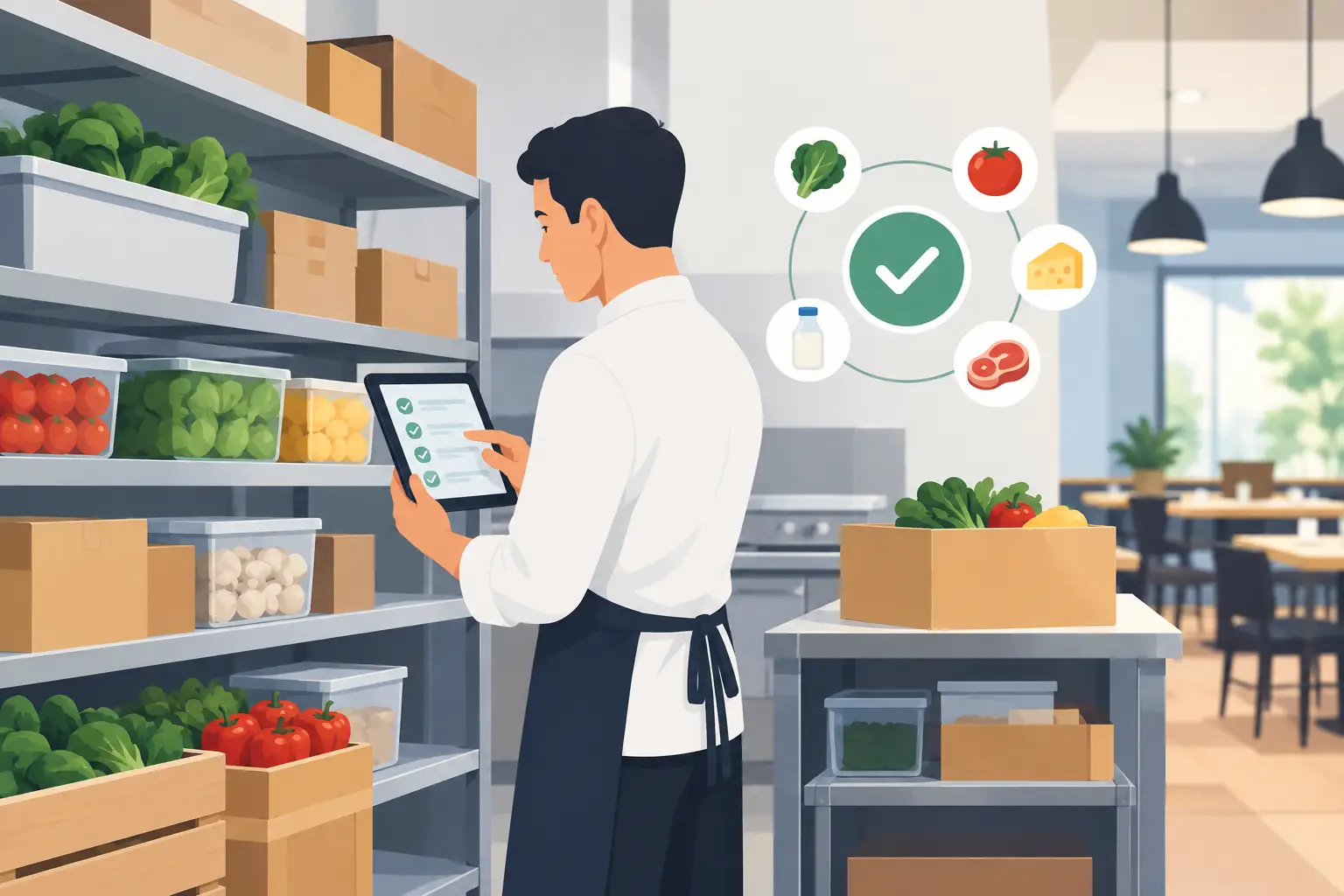
A case of produce sitting past its best day is not just a waste problem. It is cash tied up in a walk-in, prep labor pointed at the wrong work, and a food-cost number that looks worse after the damage is done. Restaurant excess inventory management is the discipline of catching that exposure while there is still time to use, sell, return, freeze, or stop buying it.
The mistake is treating excess stock as a monthly inventory-count issue. By then, the invoice has been paid, the delivery has been shelved, and the team is working around product nobody planned to have. Control starts earlier: with accurate recipes, real sales, known bookings, usable on-hand counts, and ordering decisions that reflect all four.
Restaurant Excess Inventory Management Starts With the Right Number
There is no useful definition of excess inventory without a target. A case is only excess when it exceeds what the kitchen can reasonably use before quality, shelf life, storage capacity, or cash flow becomes a problem.
That target is not the same as a static par level copied from last season. A café heading into a quiet weekday needs a different amount of milk, pastry ingredients, and grab-and-go packaging than it needs before a holiday weekend. A catering kitchen with 180 confirmed covers on Friday has a known demand signal. A restaurant with a private party, a weather event, or a menu change has a demand shift that should show up in prep and purchasing before the delivery arrives.
Start with expected usage, not the supplier’s case size. Expected usage comes from recipe quantities multiplied by forecasted sales, adjusted for current stock, open purchase orders, and a sensible buffer. The buffer matters, but it must be deliberate. If every ingredient carries an extra “just in case” allowance, the walk-in becomes the place where uncertainty goes to expire.
Find the Stock That Is Actually at Risk
Not all inventory deserves the same attention. A few pounds of dry pasta may be inconvenient, but it is not the same operational risk as excess seafood, cut herbs, cream, bakery items, or a specialty ingredient used in one slow-moving dish.
Build a short daily excess-stock view around ingredients with three characteristics: short shelf life, high unit cost, or limited menu use. These are the items that can turn a small forecasting miss into a margin problem. Include overstock caused by substituted deliveries and minimum-order quantities. The fact that an item was cheaper by the case does not make it cheaper if half the case is discarded.
A useful question for every flagged item is simple: how many servings can this stock support, and where can those servings realistically go? The answer should connect to recipes, not guesswork. If there are 12 pounds of mushrooms to use, the kitchen should know exactly which dishes consume them, how much each serving uses, and whether those dishes are selling.
Count What You Can Act On
A full inventory count still has its place for valuation and period-end food cost. It is too slow to be the only operating control. For perishable, expensive, and high-variance ingredients, use focused cycle counts between full counts. Count the products that change purchasing decisions today.
Keep units consistent. If the recipe uses ounces, but the shelf count is in half cases and the invoice price is per pound, the team is forced into mental conversions under pressure. That is where bad order quantities begin. Standardized recipe units, purchase units, and yield assumptions make on-hand inventory usable rather than merely recorded.
Trace Excess Back to Its Cause
Excess inventory is a symptom. The next order only improves when the team identifies what created it. Most causes fall into a handful of operational patterns:
- Forecasts ignored reservations, bookings, events, or recent sales trends.
- Recipes were changed, portioned inconsistently, or no longer match how the dish is made.
- Supplier pack sizes, substitutions, or price changes altered what arrived.
- A menu item slowed down, but its purchasing and prep assumptions stayed the same.
- Teams ordered against memory because current stock and open orders were not visible.
The point is not to assign blame to the chef, purchaser, or receiving team. It is to close the loop. If a vendor substitutes a larger pack, record it. If a menu item underperforms for three weeks, revisit its prep and ordering assumptions. If a recipe calls for six ounces but the line consistently plates eight, fix the recipe or fix the portioning. Costing to the cent only works when the recipe reflects the plate.
Use the Product Before It Becomes Waste
Once excess stock is identified, move quickly. The best recovery action depends on food safety, quality, and the menu. A surplus of ripe tomatoes may support a soup, sauce, staff meal, or limited-time special. Extra trim may have a legitimate secondary use. Some product should be frozen or preserved if quality permits. Some product should be returned, credited, or rejected at receiving.
Do not create a special simply because an ingredient is overstocked. A discounted dish that cannibalizes a profitable menu item, requires new prep, and sells poorly can create a second problem. Use existing recipe components where possible, price with margin in mind, and give the front-of-house team a clear reason to sell it.
The better move is often prevention. If a slow-moving ingredient appears on only one dish, consider whether that dish earns its shelf space. Cross-utilization is not about making every menu item taste the same. It is about designing a menu where a sales shift does not leave a unique case of product stranded in the walk-in.
Connect Recipes, Forecasts, Prep, and Ordering
Disconnected tools create excess stock. A chef updates a recipe in one file, a manager forecasts covers in another, and someone places orders from an old spreadsheet. Each step may look reasonable on its own, yet the kitchen still buys the wrong amount.
The operational fix is a single source of truth. When a recipe changes, its ingredient demand and plate cost should change with it. When bookings or projected sales move, prep requirements and order quantities should recalibrate. When supplier prices change, the team should see the margin impact before the next invoice exposes it.
This is the working logic behind Plate Margin: enter a recipe once, then use that same recipe data across costing, menu analysis, forecasts, prep lists, and supplier-aware ordering. That matters because the kitchen is not managing inventory in isolation. It is managing the chain of decisions that creates inventory.
A prep list built from expected sales prevents another common form of excess: overproduction. If prep is based on habit rather than forecasted covers and current stock, the kitchen can be perfectly stocked and still throw away finished components. The order is only as good as the prep plan it supports.
Make Ordering a Review, Not a Guess
Before submitting an order, review the few numbers that change the decision: projected demand, usable on-hand quantity, product already on order, expected deliveries, and minimum shelf-life needs. Then ask whether the proposed quantity can be used before the next order cycle.
This does not require false precision. Demand will never be exact, and a kitchen needs protection against late deliveries and unexpected volume. It does require making the buffer visible. A two-day buffer may be right for a reliable staple and wrong for fresh fish. The correct level depends on supplier reliability, delivery frequency, storage, lead time, and the cost of running short.
Give the Team Clear Ownership
Inventory controls fail when everyone is involved but nobody owns the final number. Set a simple rhythm. One person verifies receiving and substitutions. One person owns focused counts on high-risk items. The chef or kitchen manager reviews excess stock before ordering. The team records waste by ingredient and reason, not as a vague daily total.
Review the pattern weekly. Look for repeat offenders: ingredients regularly over-ordered, recipes with unexplained variance, menu items that do not pull their weight, and vendors whose substitutions create excess. A waste log is only useful when it changes a purchasing, prep, recipe, or menu decision.
The goal is not an empty walk-in. Running too lean can cause stockouts, rushed substitutions, and missed sales. The goal is a walk-in where every item has a job, a realistic path to the plate, and a reason to be there. If a product cannot answer those questions before the order is placed, it is probably excess waiting to happen.