Commercial Kitchen Maintenance Checklist
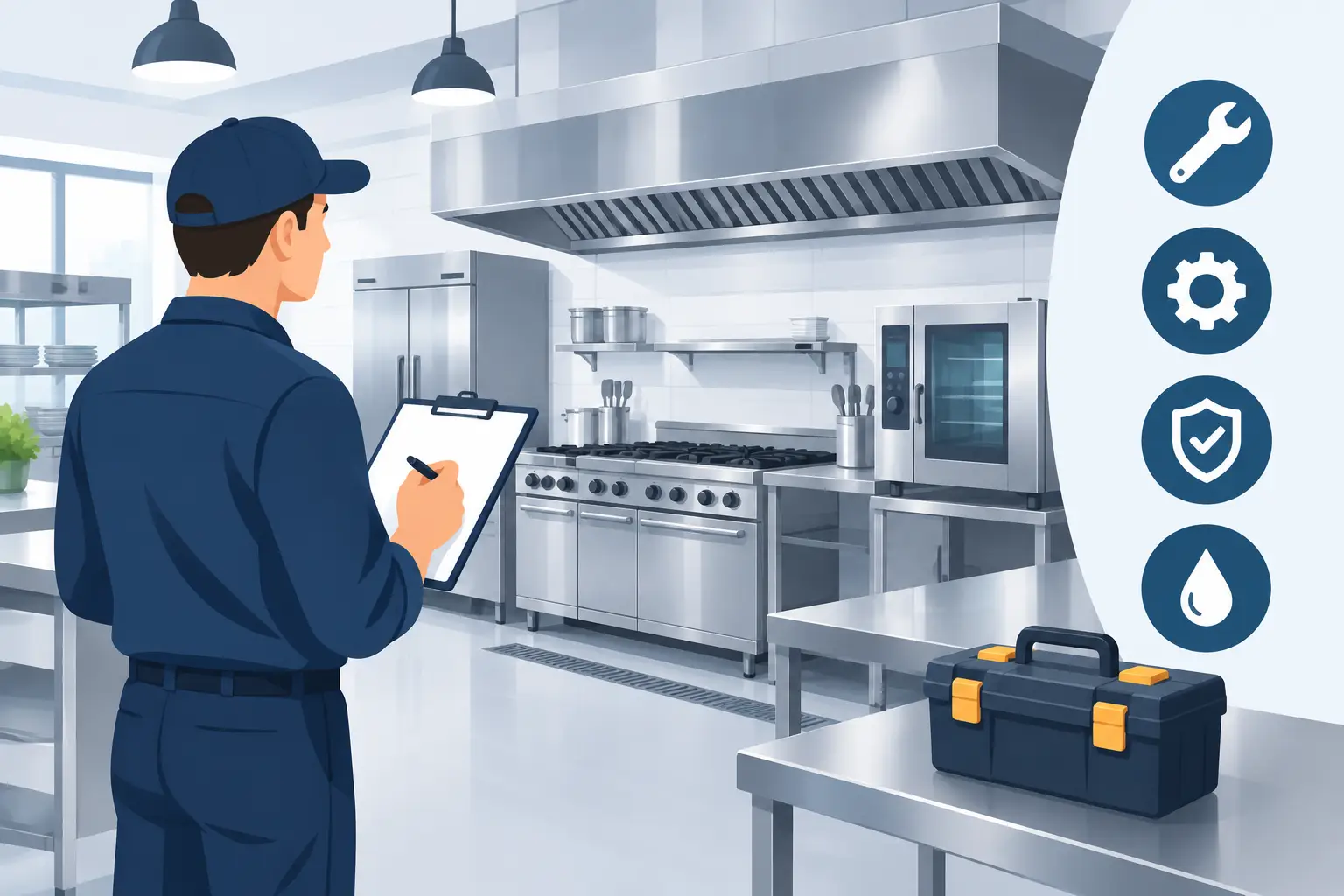
A failed walk-in at 4 p.m. is not an equipment problem alone. It is a prep problem, a food-safety problem, a purchasing problem, and often a margin problem by the end of the shift. A commercial kitchen maintenance checklist gives the team a repeatable way to catch small faults before they become lost product, canceled covers, emergency labor, and a technician bill nobody planned for.
The aim is not to turn chefs into refrigeration engineers. It is to make ownership clear: operators inspect what they can see, clean what affects performance, log what changes, and call a qualified technician before a minor warning becomes downtime.
Build the checklist around risk, not equipment manuals
Manufacturers' manuals matter, especially for cleaning instructions and service intervals. But they do not tell you what a busy kitchen needs checked before prep, after close, or during a heavy weekend. Your working checklist should combine the manual with the points where failure costs you most: cold storage, cooking line, ventilation, warewashing, water, gas, and the small equipment that holds production together.
Start with an asset register. For every unit, record the make, model, serial number, install date, warranty information, service contact, filter sizes, shutoff locations, and the last service date. Add the practical details your team actually needs, such as the correct walk-in temperature range, fryer oil capacity, or hood-filter dimensions.
This record matters most across multiple venues. If one site calls a combi oven a "Rational" and another logs it as "the big oven," maintenance history becomes useless. Use one naming standard, one inspection format, and one place to assign and close work.
A good checklist also separates three jobs. Daily checks keep equipment safe and usable. Scheduled cleaning protects efficiency and food quality. Professional preventive maintenance covers technical work that should never be improvised by an untrained team member.
Daily commercial kitchen maintenance checklist
Daily checks should fit into opening, handover, and close. If they take an hour of clipboard work, they will be skipped. Keep them specific, quick, and tied to the people already working in each area.
At opening, verify that refrigeration and freezer temperatures are in range and that doors seal fully. Look for standing water, ice buildup, unusual fan noise, error codes, warm product, or compressors running constantly. A temperature log without an action note is only half a control. If a unit is out of range, record what happened to the food, what corrective action was taken, and who owns the repair call.
On the line, inspect gas connections visually for damage, confirm pilot lights or ignition systems are behaving normally, and check that burners heat evenly. Test oven doors, combi gaskets, griddle surfaces, fryer controls, and hot-holding temperatures before the rush. Do not wait until tickets are on the rail to find a weak burner or a steam oven that will not drain.
At close, the team should complete the cleaning that directly affects performance and safety:
- Wipe refrigerator and freezer gaskets, then remove crumbs or debris that stop doors sealing.
- Empty, filter, and cover fryer oil according to your oil-management routine. Check for leaks and damaged baskets.
- Clean grill, griddle, range, and oven surfaces after they are cool enough to handle safely.
- Clean dish machine screens, wash arms, and scrap traps. Leave the door open if the manufacturer directs it.
- Check hood filters for grease loading and confirm the fire-suppression pull station and access are unobstructed.
- Inspect floors, drains, and mats. Slow drains, pooling water, and loose mats create both pest and slip risks.
These are not cosmetic tasks. A blocked dishwasher arm means rewashes and labor. A dirty condenser coil makes a refrigerator work harder. A door gasket that leaks can quietly raise energy use and shorten compressor life before the invoice does.
Weekly checks that protect service
Weekly maintenance is where kitchens prevent the recurring faults that daily cleaning alone will not solve. Assign it to named roles and schedule it during a realistic lower-volume window. Friday night is not the moment to deep-clean an ice machine or pull out the reach-ins.
Move mobile equipment and clean behind it. Grease, dust, food debris, and cardboard fragments collect where you cannot see them, then attract pests and block airflow. Inspect casters and brakes while equipment is pulled forward. A rolling prep table with failed brakes is a service hazard, not a minor inconvenience.
Clean refrigeration condenser filters or accessible coils only as the manufacturer permits. Some units need a trained technician for coil cleaning, and aggressive brushing can damage fins. Check evaporator fans for noise or vibration, clear drain lines where appropriate, and look for water under refrigerated equipment.
Run a more deliberate check on dishwashers and ice machines. Confirm chemical levels, check that dosing is working, inspect spray patterns, and descale or sanitize on the schedule specified for your water conditions. Hard water changes the interval. If your machine is leaving spots, failing to reach temperature, or producing cloudy ice, do not normalize it. Those signals usually get more expensive with time.
Test probe thermometers against a known reference and replace damaged probes. Accurate food temperatures depend on accurate tools. The same principle applies to scales used for prep and portioning. If recipe yields and portion costs are based on a scale that drifts, your costing is not made honest.
Monthly and quarterly preventive maintenance
Monthly checks are best handled as a short manager review paired with task completion. Look at repair logs, repeat faults, temperature trends, utility spikes, and equipment that is taking longer to recover than usual. A pattern matters more than one isolated issue.
Inspect door hinges, handles, gaskets, latches, seals, and control knobs across the kitchen. Check water filters and change them on schedule. Review hood-filter cleaning frequency against actual grease production, not a calendar copied from a quieter season. A high-volume charbroiler operation may need more frequent attention than a café with limited hot food.
Quarterly or semiannual professional service should cover the technical systems that carry the largest risk. Depending on the equipment and local code, that may include refrigeration performance, gas pressure and combustion, hood and duct cleaning, fire-suppression inspections, grease-trap service, water-system checks, and calibration of ovens or combis.
Do not confuse a service visit with preventive maintenance just because a technician was called after something failed. Planned work happens before breakdown. Emergency repair is the premium-priced version of the same work, usually with product loss attached.
Connect maintenance to food cost and purchasing
Maintenance is often filed under facilities, while food cost sits with the chef or operator. In a working kitchen, they are connected. A walk-in running warm shortens shelf life. A freezer door that does not seal increases ice buildup and burns product. A fryer with poor oil control affects flavor, waste, and how often you buy oil. A faulty dishwasher creates rewash labor and chipped glassware.
Track maintenance events alongside waste and stock adjustments. If dairy waste rises after a refrigeration alert, you have a cause worth investigating. If fryer oil use increases, check filtration routines and fryer performance before assuming purchasing made an error. The point is not to blame the team. It is to stop treating connected operational failures as separate numbers.
Plate Margin can keep equipment-maintenance tasks visible alongside waste, stock, ordering, prep, and recipe data, so the kitchen is working from one operational record rather than scattered notes. When responsibility, due dates, and history are visible, a recurring fault is harder to ignore.
Make completion accountable
A checklist only works when a missed task is visible and a failed check triggers an action. Avoid vague boxes marked "equipment checked." Use pass, fail, or not applicable, with a required note for failures. Assign the corrective action to a person, set a due date, and confirm completion.
Keep the standard practical. A line cook can report a worn gasket, a strange motor sound, or a slow drain. They should not be asked to diagnose a refrigerant issue or repair electrical components. Train the team on what normal looks and sounds like, where shutoffs are located, and when equipment must be taken out of service.
Set a weekly five-minute review with the chef or kitchen manager. Ask what failed, what was repaired, what is recurring, and whether any equipment is now affecting prep capacity, menu availability, or ordering. That small discipline is how maintenance becomes operational control rather than a binder that appears only when something breaks.
The best time to find a failing fan, gasket, filter, or drain is when the kitchen still has options. Build the checks into the rhythm of service, give every exception an owner, and keep your team focused on cooking instead of recovering from avoidable failures.